


Hospital alarm fatigue has become one of the most urgent patient safety challenges facing hospitals today. Nurses and frontline caregivers are exposed to hundreds — sometimes thousands — of alarms per shift. According to the American Association of Critical-Care Nurses, between 72% and 99% of alarms in clinical settings may be false or clinically insignificant.
As alarm volume rises, caregivers become increasingly desensitized to alerts, creating serious risks for delayed response, missed intervention opportunities, and preventable patient harm.
At the same time, hospitals continue facing pressure to reduce patient falls, improve nurse workflow efficiency, strengthen compliance, and modernize workflows without adding infrastructure complexity or operational burden. Many organizations are also focused on improving patient safety workflows across units while working within mixed technology environments.
But one critical reality is often overlooked:
hospital alarm fatigue is no longer simply a monitoring problem.
It is a connectivity, visibility, and workflow orchestration problem.
The Hidden Gap in Alarm Management: Bed Connectivity
Most hospitals already use bed exit alarms to support fall prevention initiatives. Yet in many care environments, bed alarms still operate as isolated systems rather than integrated parts of a connected patient safety workflow.
As a result, hospitals often rely on fragmented workflows involving:
- Local audible alarms
- Hallway annunciators
- Overhead paging
- Generic nurse station notifications
- Manual room checks
- Inconsistent nurse call integrations
- Disconnected bed communication systems
In busy inpatient environments, these alerts compete against countless interruptions throughout the day. Fragmented workflows undermine connected patient safety workflows and create unnecessary friction for nurses, IT teams, and facilities departments alike.
The issue is that too many alarms lack:
- Reliable connectivity
- Real-time visibility
- Intelligent escalation
- Workflow context
- Actionable prioritization
Every missed or disconnected bed alarm introduces risk — especially when caregivers cannot easily confirm whether a bed is actively connected to the nurse call system, making preventing missed bed alarms a daily operational concern.
Why Bed Alarm Failures Continue to Happen
Missed bed exit alarms are rarely caused by a single device failure. Effective bed exit alarm management must address multiple points of breakdown across the care environment.
More often, failures stem from fragmented workflows and unreliable infrastructure where:
- Beds become unplugged during transport or room turnover
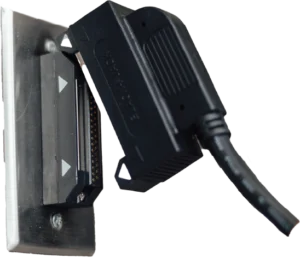
- Damaged cables interrupt communication
- Staff cannot quickly verify connection status
- Alerts are duplicated across disconnected systems
- Escalation workflows are inconsistent
- Nurses experience constant interruption fatigue
- Different bed fleets and nurse call systems create workflow inconsistency and limit interoperability
For nursing leaders, IT teams, and facilities departments, these challenges create both patient safety risk and operational inefficiency. Many hospitals are now evaluating integrated bed communication systems and patient fall prevention technology to help standardize workflows across mixed environments.
Disconnected or unreliable bed communication workflows can lead to:
- Preventable falls
- Delayed caregiver response
- Increased troubleshooting tickets
- Equipment downtime
- Staff frustration
- Compliance gaps
- Higher maintenance costs
- Reduced confidence in safety systems
The Joint Commission has repeatedly identified alarm fatigue as a major patient safety concern, emphasizing the need for healthcare organizations to improve alarm system management and reduce non-actionable alerts — reinforcing the urgency of modern clinical alarm management.
Yet many fall prevention strategies still focus primarily on the alarm device itself instead of the infrastructure, connectivity, interoperability, and visibility surrounding the alarm.
Connected Bed Communication Changes the Equation
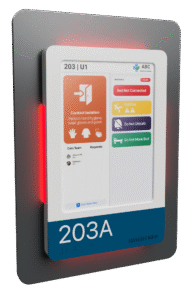
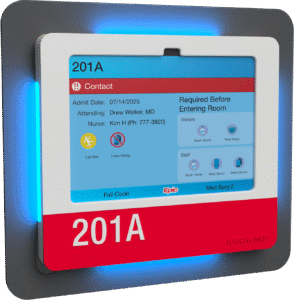
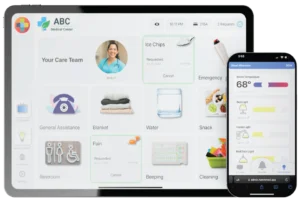
Modern digital door signage connects directly to the hospital’s EMR and patient flow systems, often using ADT (admission, disThe next evolution of clinical alarm management requires more than monitoring devices alone. It also requires connected bed communication systems and integrated nurse call workflows that support reliable, scalable patient safety operations.
It requires connected bed communication built around reliable connectivity, visible status awareness, and integrated workflow intelligence.
When beds are seamlessly integrated into nurse call systems and broader communication workflows, alarms become:
- More actionable
- More visible
- More reliable
- More intelligently routed
- Easier to prioritize
This becomes especially important in hospitals managing mixed bed fleets and multiple nurse call platforms, where interoperability gaps often create hidden workflow and safety risks.
A standardized bed exit alarm workflow that reduces nurse alarm fatigue depends on reliable nurse call integration, thoughtful escalation routing, and clear visibility into room readiness and connectivity status.
Instead of broadcasting alerts unit-wide, connected workflows can:
- Route alerts directly to assigned caregivers
- Escalate notifications automatically if unanswered
- Maintain alarm continuity during bed movement
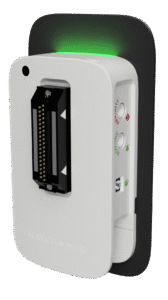
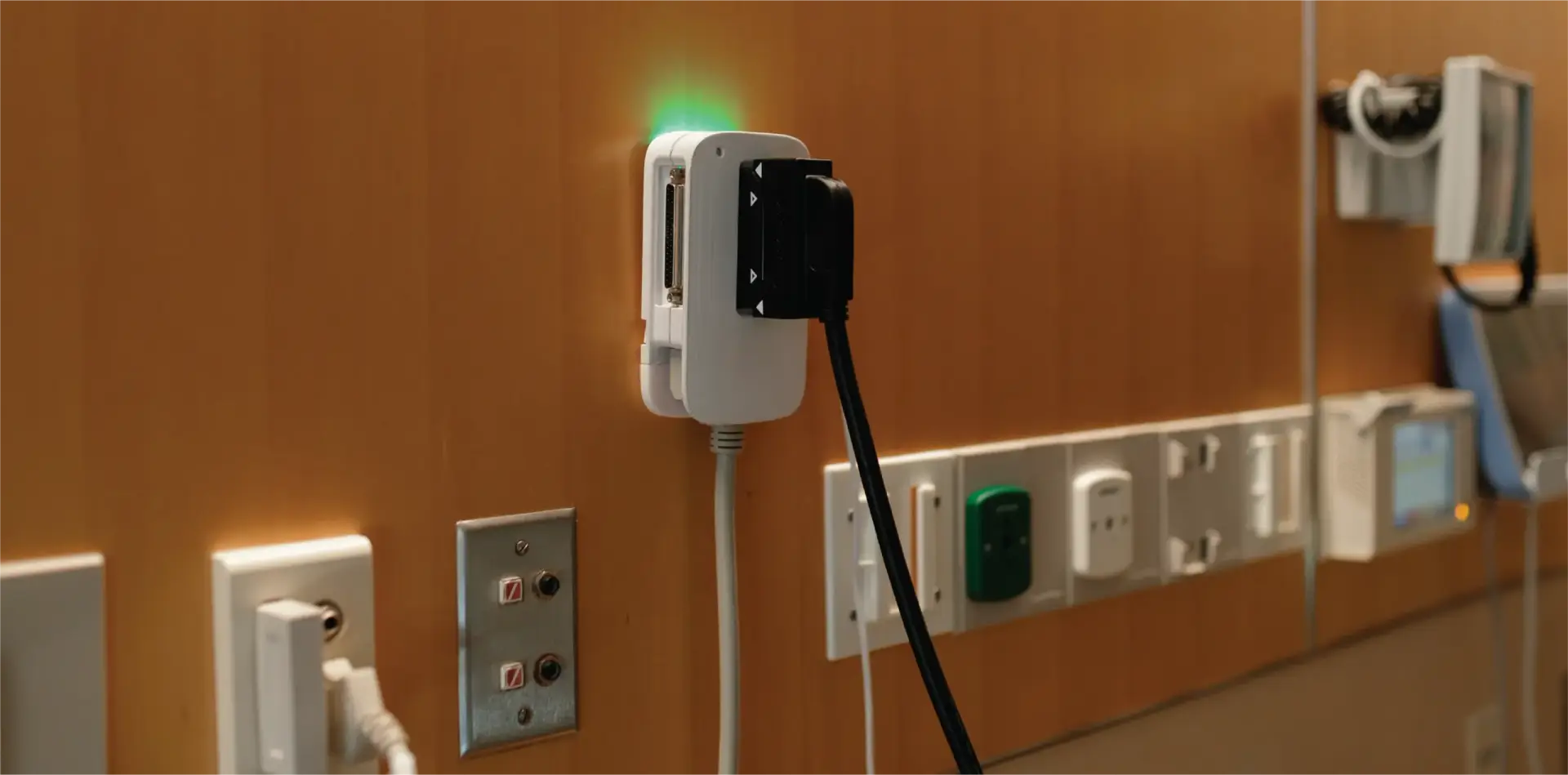
- Provide instant visual confirmation of active connections
- Reduce unnecessary alarm noise while reducing false bed alarms in hospitals
- Improve room readiness and turnover efficiency
- Strengthen compliance visibility
- Support scalable smart room integration strategies across units
This shift helps hospitals move from reactive alarm environments toward proactive, connected patient safety ecosystems.
More importantly, it reduces one of the biggest contributors to hospital alarm fatigue:
Non-actionable uncertainty.
Visibility Matters as Much as Connectivity
One of the most overlooked contributors to hospital alarm fatigue is the lack of immediate visibility into whether beds and alarms are actually connected and functioning properly.
When staff must manually verify alarms, troubleshoot cables, or second-guess room readiness, workflow friction increases dramatically.
Real-time visual confirmation changes that dynamic.
At-a-glance visibility into bed connectivity allows nurses, IT teams, and facilities staff to:
Verify alarm readiness instantly
Reduce manual checks
Accelerate room turnover
Simplify troubleshooting
Improve compliance confidence
Prevent silent alarm failures before they happen
For teams asking how to reduce bed alarm fatigue, real-time visibility into connectivity status — combined with reliable routing and interoperability — provides a practical and scalable answer.
This transforms alarm management from reactive troubleshooting into proactive safety assurance.equiring manual intervention from staff.
Smarter Alarm Workflows Reduce Noise Without Sacrificing Safety
Hospitals cannot eliminate alarms entirely — nor should they.
The goal is not fewer alerts at all costs.
The goal is smarter alerts supported by reliable infrastructure, integrated workflows, and contextual visibility.
Connected bed communication supports this balance by helping organizations:
- Reduce unnecessary unit-wide alarm broadcasting
- Improve targeted alert delivery
- Minimize workflow interruptions
- Reduce cognitive overload
- Strengthen escalation pathways
- Improve coordination across care teams
- Create standardized safety workflows across mixed bed fleets and nurse call systems
These connected workflow improvements help strengthen patient safety workflows without sacrificing situational awareness.
For hospitals facing staffing shortages and rising patient acuity, reducing workflow friction is becoming just as important as reducing alarm volume itself.ms, making deployment easier across healthcare systems.
Patient Falls Are Also an Operational and Infrastructure Challenge
According to the Agency for Healthcare Research and Quality (AHRQ), falls with injury can add more than $14,000 in additional costs per patient event. CMS also classifies many fall-related injuries as preventable hospital-acquired conditions.
But the operational consequences extend far beyond reimbursement pressure.
Patient falls contribute to:
- Caregiver burnout
- Increased sitter utilization
- Workflow inefficiency
- Manual safety workarounds
- Administrative burden
- Lower patient satisfaction
- Reputational risk
For healthcare leaders, fall prevention increasingly depends on building connected environments where communication, visibility, interoperability, and workflow orchestration work together seamlessly.
Many hospitals are now prioritizing safety modernization strategies that improve visibility and connectivity without requiring large-scale infrastructure replacement projects.
The Future of Alarm Management Is Connected, Visible, and Intelligent
Hospital alarm fatigue is no longer just a device management issue.
It is an interoperability and workflow intelligence issue.
Hospitals that continue relying on disconnected bed alarms and fragmented workflows risk creating environments where critical alerts compete against constant, non-actionable noise.
Connected bed communication changes that dynamic by combining:
- Reliable connectivity
- Real-time visibility
- Workflow intelligence
- Interoperability across systems
- Scalable smart room integration
As healthcare organizations continue modernizing patient safety strategies, connected bed ecosystems are becoming more than infrastructure upgrades.
They are becoming foundational components of safer, smarter, and more responsive care environments.
Because reducing alarm fatigue is not simply about making hospitals quieter.
It is about helping caregivers instantly recognize, prioritize, and respond to the alerts that matter most.
Learn more about bed connectivity options with HatchMed.

This is exactly what I was looking for. Great post!