


Designing the Connected Patient Room: What Hospitals Should Consider During a Renovation
A hospital renovation is an opportunity to do more than update finishes, replace furniture, or install new equipment. It is a chance to reconsider how the patient room functions as a whole.
That matters because today’s patient room contains more technology than ever: connected beds, nurse call systems, digital signage, patient engagement platforms, mobile devices, room controls, and other clinical technologies. Yet adding more technology does not necessarily create a more connected environment.
In fact, when each device is planned independently, hospitals can end up with more cables, more interfaces, more infrastructure to maintain, and more information for care teams to interpret.
For planning, design, facilities, and clinical leadership teams, the question shouldn’t simply be:
What technology do we need in the new room?
It should be:
How will all of this technology work together?
Organizations such as the Facility Guidelines Institute increasingly treat healthcare planning and design as a discipline that extends well beyond physical dimensions alone. Likewise, AHRQ’s Health Care Facility Design Safety Risk Assessment Toolkit emphasizes designing the built environment around patient and staff safety, workflows, and potential risks.
That same systems thinking should apply to the technology inside the room.
Start With the Infrastructure You Already Have
One of the first questions during a renovation is what actually needs to be replaced.
Hospitals have already invested heavily in nurse call systems, hospital beds, patient stations, and other clinical infrastructure. Modernizing the patient room shouldn’t automatically mean tearing those systems out and starting over.
HighLightX is designed around a different approach.
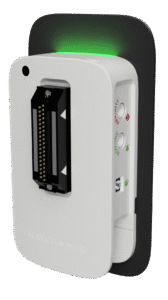
The nurse call smart hub works with the bed and nurse call infrastructure already in place, creating a new connection point at the bedside without requiring a complete rip-and-replace strategy.
For planning and design teams, that’s an important principle:
Build new capabilities on top of infrastructure that still works.
This approach can make modernization easier to phase while creating a foundation for new patient-room technologies over time.
Plan the Room as a Connected System, Not a Collection of Devices
A bed may come from one manufacturer. Nurse call may come from another. Digital signage, patient engagement, and room controls may each have their own platforms.
If every technology is specified separately, the room can quickly become a collection of isolated endpoints.
Instead, planning teams should define the connectivity architecture of the room alongside the physical architecture.
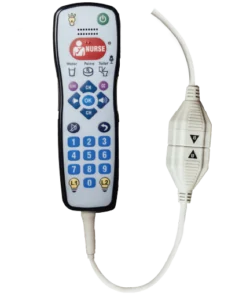
HighLightX serves as the nurse call smart hub at the bedside, connecting the hospital bed, nurse call system, patient controls, bedside technology, and cloud-connected applications.
That means several questions should be answered before walls are closed:
- How will the bed communicate with nurse call?
- How will staff know whether that connection is active?
- How will room information reach technology outside the room?
- How will patients interact with the environment?
- Where will power and network connectivity be required?
- How easily can future technologies be added?
The need for this type of interoperability is becoming more important across healthcare. Federal health IT data show that hospitals are increasingly exchanging information between EHRs and third-party technologies; in 2024, nine in ten hospitals integrated third-party data into their EHR for at least one clinical purpose. Read the ONC data brief on hospital API use.
The physical room should be designed with that same expectation of connectivity.
Think About What Happens When the Bed Moves
Patient-room design has to work during everyday clinical activity, not just look organized on opening day.
Hospital beds move.
They’re repositioned, transferred, cleaned, serviced, and sometimes pulled away from the wall quickly. That makes the physical bed connection an important design consideration.
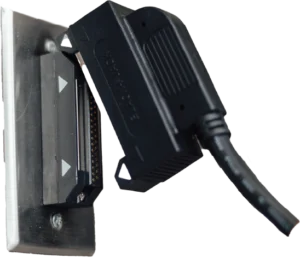
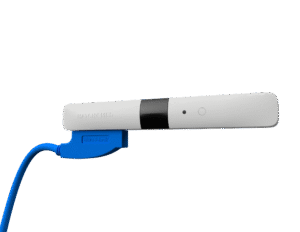
BlackJack creates a magnetic breakaway connection between the hospital bed and nurse call infrastructure. Rather than placing the entire strain of a moving bed on a traditional cable or wall connection, the magnetic connection separates when necessary.
When BlackJack is paired with HighLightX, that physical connection also becomes visible information.
HighLightX can indicate whether the hospital bed is connected to nurse call, allowing care teams to confirm the status at a glance.
That’s especially important when considering patient safety. AHRQ notes that the built environment can influence patient safety outcomes and that facility design should account for risks such as falls. Explore AHRQ’s resources on hospital design and patient safety.
For planning teams, the takeaway is simple:
Don’t just specify where equipment connects. Design for what happens when people actually use it.
Extend the Patient Room Into the Hallway
The connected patient room doesn’t end at the door.
Hallways are active clinical environments. Nurses, physicians, environmental services, transport teams, and other staff continuously move between rooms and make decisions based on what they know about the patient inside.
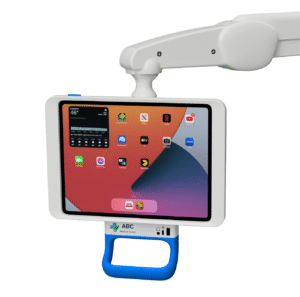
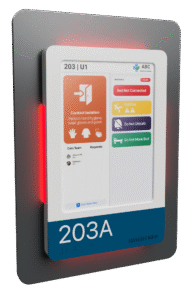
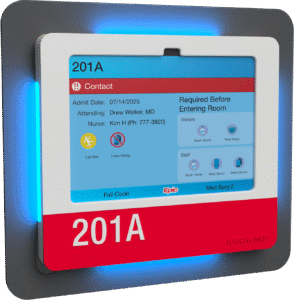
HallMonitor extends patient-room information into that space through digital door signage.
HighLightX can feed real-time room information to HallMonitor, including active requests, care indicators, and bed-connection status, helping staff understand important information about the room before entering.
HallMonitor itself is designed to bring real-time information and illuminated visual cues into a healthcare-grade door display.
That means digital signage should be included early in the planning process rather than treated as an accessory near the end of construction.
Teams should ask:
Where should information be visible? What information should appear outside the room? How will the sign receive its data? How will it fit into clinical workflows instead of creating another screen staff have to manage?
When those questions are answered early, the hallway can become an extension of the connected care environment.
Design the Room Around Patient Autonomy
There is another user of the patient room who is sometimes overlooked during technology planning:
The patient.
A connected room shouldn’t only make information easier for staff to access. It should make the environment easier for patients to use.
Increasingly, patients arrive with a technology interface they already understand—their smartphone.
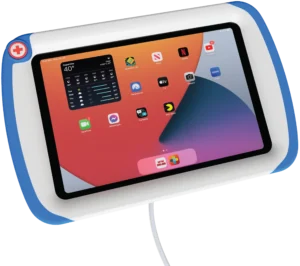
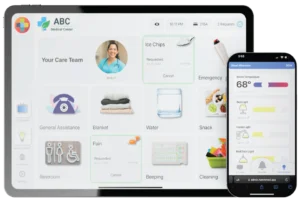
ComCierge allows patients to interact with nurse call and room functions from a hospital-owned tablet or their own device. HatchMed’s platform can support controls such as television and room functions while routing applicable requests through existing nurse call workflows.
Through HighLightX, that patient-facing experience becomes part of the broader connected bedside ecosystem. Patients can use their device to interact with room controls and send requests into nurse call rather than relying exclusively on another dedicated bedside interface.
This direction also aligns with broader trends in healthcare technology. Federal data show continued hospital adoption of app-based patient engagement capabilities, particularly in inpatient settings. See the latest HealthIT.gov data on patient engagement technology.
For hospital planners, that raises an important question:
Does every interaction in tomorrow’s patient room still require another dedicated piece of hardware?
Or can the room increasingly adapt to the technology patients already know how to use?
Plan Power and Networking Before They’re Expensive to Change
A connected patient room depends on infrastructure that patients may never see.
Power.
Networking.
Mounting.
Cable pathways.
Cloud connectivity.
These details may not be visually exciting during the design process, but they’re difficult and expensive to address after construction.
HighLightX supports wired Ethernet or wireless connectivity and multiple power and mounting approaches intended for renovation and new-construction environments.
Similarly, HallMonitor and other networked devices need to be considered when planning power and network locations.
This is where technology planning needs to happen alongside architectural, electrical, IT, clinical engineering, and facilities planning—not after those decisions have already been made.
A wall that doesn’t contain the right connection today may become a costly change order tomorrow.
Build for Technology That Doesn’t Exist Yet
Hospital rooms are expected to remain functional for years.
Technology cycles are much shorter.
That’s one of the fundamental challenges of healthcare design.
A room designed too tightly around today’s exact devices can become restrictive as patient engagement platforms, connected beds, monitoring systems, digital signage, and clinical workflows evolve.
That makes flexibility one of the most important characteristics of the connected patient room.
HighLightX is designed to bring beds, nurse call, patient engagement, digital signage, and future technologies into a broader connected platform while extending infrastructure hospitals already own.
Planning teams should therefore consider not only:
What are we installing?
But:
What will we want to connect five years from now?
The most future-ready patient room isn’t necessarily the room with the most technology.
It’s the room that makes the next technology easier to add.
The Connected Patient Room Is an Ecosystem
No single screen, cable, app, or device creates a connected patient experience.
It happens when those technologies work together.
HighLightX creates the intelligent bedside connection point, bringing the bed, nurse call system, patient controls, cloud connectivity, and additional technologies together.
BlackJack creates a practical magnetic connection between the hospital bed and the room’s nurse call infrastructure.
HallMonitor brings relevant patient-room information beyond the doorway, creating greater visibility for the care team.
ComCierge extends the connected environment directly to the patient, allowing them to interact with their room using technology they already understand.
Together, they create something more valuable than four individual products:
A connected patient-room ecosystem designed around patients, care teams, and the realities of the clinical environment.
For hospitals planning a renovation today, that ecosystem shouldn’t be something assembled after construction is complete.
It should be part of the room design from the beginning.
Planning your next patient room renovation?
See how HighLightX and the HatchMed connected patient-room ecosystem can help you build an infrastructure that’s ready for today’s workflows—and whatever comes next.
