


Hospitals keep adding technology to make patient rooms smarter. More connected devices, more data, more automation, more ways to communicate, and more systems intended to improve care.
We think it’s time to stop.
That may sound strange coming from a healthcare technology company. But the smartest patient room isn’t the one with the most tech. It’s the one where technology works together so seamlessly that the people in the room barely have to think about it at all.
That’s a very different design challenge.
So, instead of asking what else could be added to the room, we started with, “How can we make what’s already there work better together.” And that, is the defining philosophy behind everything we do at HatchMed.
We understand that great product design cannot eliminate all complexity. A modern patient room is inherently complex. But what is can do is make that complexity legible. It can help people understand what is happening, what matters, and what they need to do next.
Without manuals, without endless mental checklists and without another layer of interpretation.
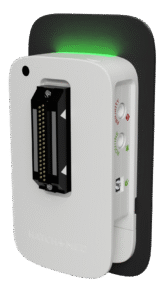
That principle shaped HighLightX, HatchMed’s nurse call smart hub and earned it a 2026 Red Dot Award for Product Design. The recognition reinforces something we believe strongly: the best healthcare technology should make complexity disappear and make complicated environments easier to understand.
Design for the room that actually exists
Designing a healthcare product is isolation is the easy part. The real test begins when they enter a patient room.
“The room is the hardest part,” says Kyrylo Keydanskyy, Chief Product Officer at HatchMed. “Picture a nurse at 3 a.m. juggling two power cords, a bed cable, an IV pump and a patient who needs the bathroom right now. Then picture the installer walking into the oldest room on the floor, wired decades ago by someone who’s long gone. Those are the two people we design for.”
Those two users expose something fundamental about healthcare design. A product has to communicate clearly under pressure, but it also has to work within infrastructure that may vary dramatically across hospitals, floors, or even room to room.
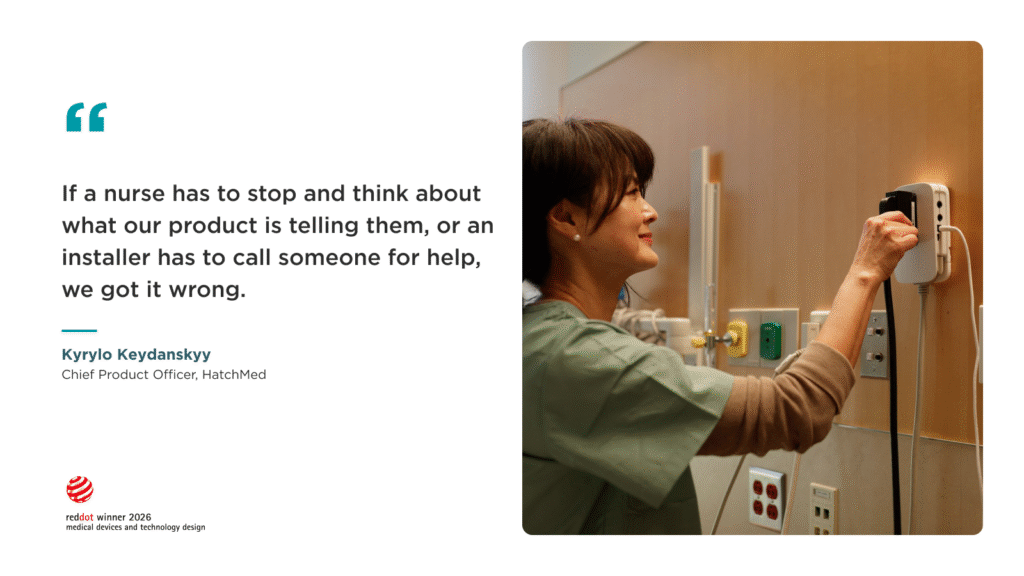
“If a nurse has to stop and think about what our product is telling them, or an installer has to call someone for help, we got it wrong,” Keydanskyy says.
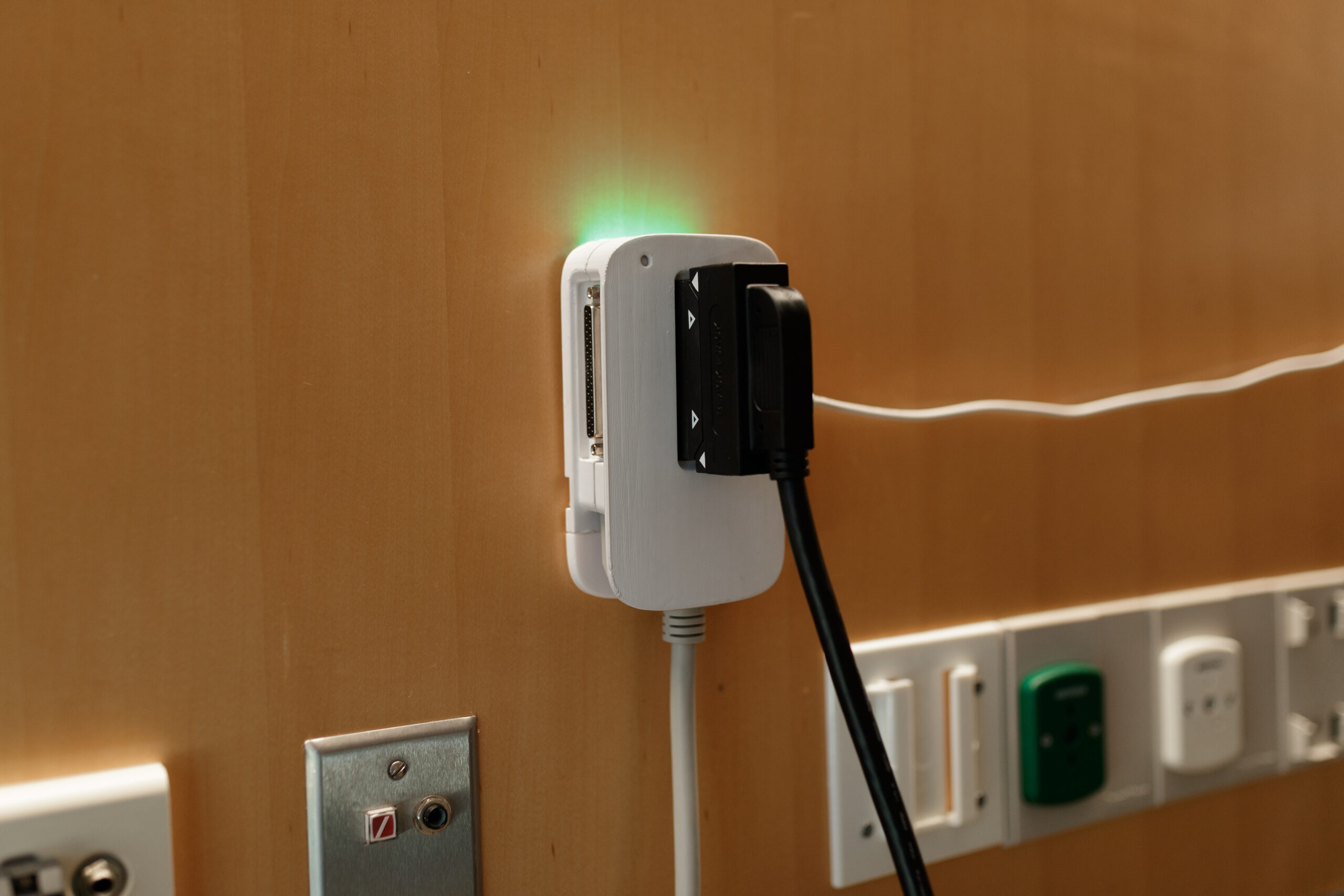
HighLightX was designed around that reality. Rather than requiring hospitals to replace existing beds or nurse call infrastructure, it works as a connection point between systems they already own and newer connected-room workflows.
The sophistication is under the hood: PoE for new construction, easy power wiring for retrofits, Wi-Fi 6, Ethernet, and flexible installation methods. But complexity behind the wall shouldn’t create complexity in the room, especially for caregivers.
Clarity sometimes means saying less
Product teams are usually rewarded for adding things. More capabilities create longer feature lists, more impressive demonstrations, and more boxes to check on a specification sheet.
Good design also requires knowing what to leave out.
“Early on we did an exercise I love: what’s the craziest thing we could ever put on this box?” Keydanskyy says. “We put everything on the table, then pared it back to what a nurse actually needs. The biggest thing we left out is noise.”
That restraint is particularly visible in how HighLightX communicates bed connection status. The team could have used the light to communicate a long list of conditions through an equally long list of colors and patterns, asking the nurse to manage the technology.
They chose not to.
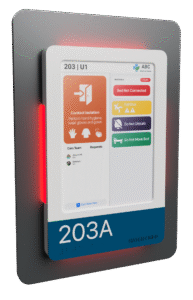
Keydanskyy recalls seeing a hospital use yellow hallway lights to indicate fall-risk patients. The problem was that almost every patient was considered a fall risk. The hallway eventually became a row of yellow lights, and the information lost its meaning.
“When the bed is connected, monitored and ina safe state for the patient the light is green and you’re good to leave the room,” he says. “When the light is red the patient isn’t safe, so don’t walk away yet. If a light needs a cheat sheet, it’s decoration.”
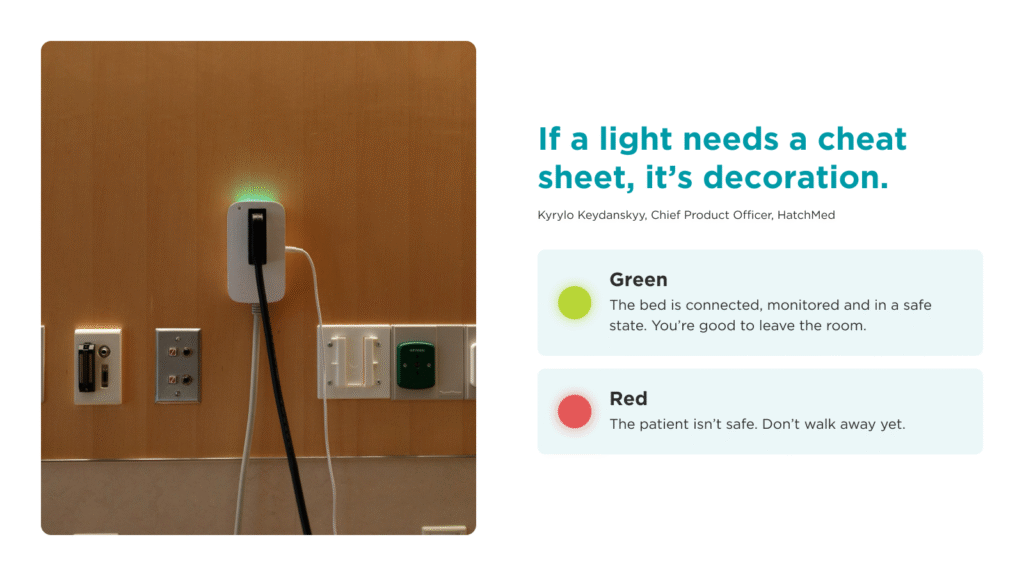
That is the difference between displaying information and designing information flows. More data does not necessarily create more understanding.
Healthcare environments punish design assumptions
Consumer products can often be designed with the expectation that users will handle them carefully. Healthcare technology, however, must be designed to withstand the demands of real-world clinical environments.
“A care team’s whole focus is the patient, and it should be,” Keydanskyy says. “Equipment always comes second, so our products have to be fine coming second too.”
In practice, that means a bed may be rolled away while a cable is still attached. A device may be dunked in cleaning solution repeatedly throughout the day. Equipment may be installed in a decades-old room or incorporated into a brand-new construction project. Hospital IT may approve one networking configuration and reject another.
Those conditions are not exceptions to design around. They are the design brief.
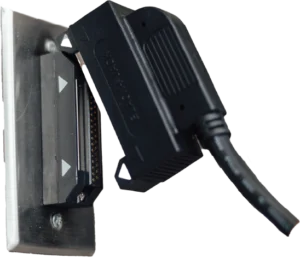
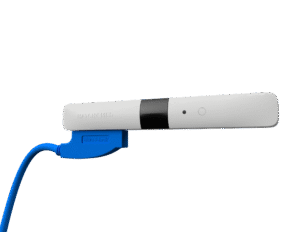
HighLightX’s magnetic breakaway connection is one example. With a conventional connection, moving the bed without unplugging it can bend pins, crack a wall port, or most dangerously create a failure that is not immediately visible, resulting in patient alarms not reaching their care team. HatchMed’s BlackJack XA magnetic connection separates cleanly when pulled, while HighLightX alerts staff to the loss of connection.
HighLightX also uses a seamless retrofit approach that connects with existing nurse call infrastructure. None of those details exists because they look good on a feature sheet. They exist because products in hospitals have to survive the way hospitals actually work.
Complexity should be optional
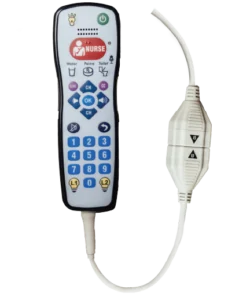
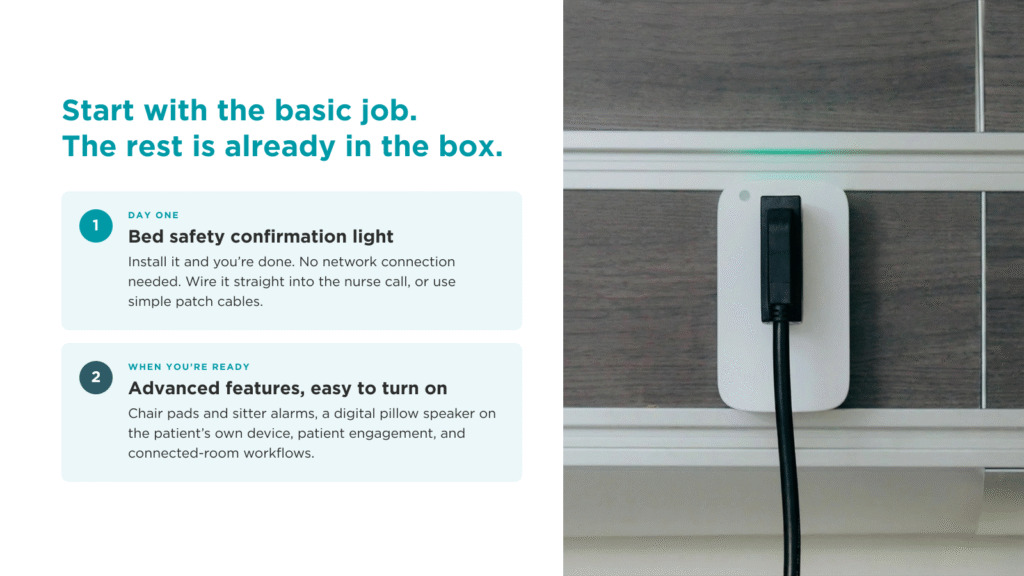
HighLightX can do considerably more than indicate whether a bed is connected. It can support chair pads and sitter alarms, enable the patient to use a digital pillow speaker on their own device, connect with patient engagement technology, and act as a hub for broader connected-room workflows.
But all that capability doesn’t mean forcing every hospital to deal with all of it at once.
“HighLightX does a lot for its size,” Keydanskyy says. “Every feature you add to a small product makes it harder to keep the basic job simple, and most people start with the basic job.”
So HighlightX starts there.
“If you only want the bed safety confirmation light, you install it and you’re done,” he says. “You don’t need a network connection. You can wire it straight into the nurse call through the back or use simple patch cables, and a retrofit goes in as easily as new construction. When you’re ready for the advanced features, they’re already in the box and easy to turn on.”
A smarter room needs clearer information, not more of it
The smart patient room often looks like more: more screens, more sensors, more automation, more AI, more data.
Keydanskyy and his team challenge that assumption.
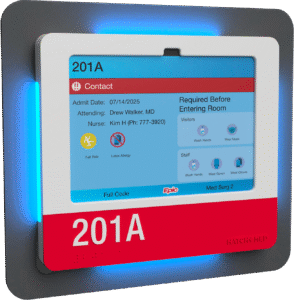
“Hospitals don’t have extra nurses to watch all of it,” he says. “To me, a smart room is one where the nurse walking down the hall already knows which room needs them.”
That turns the usual smart room question on its head. Instead of asking how much information another device can collect or display, ask what information someone actually needs to know in that moment, and where they need to see it.
HighLightX was not designed to become another source of truth. The nurse call system, hospital beds, and EMR already own important clinical information. The job of HighLightX is to help make information available where it becomes useful without creating another system clinicians have to manage.
That means greater visibility for nursing, simpler installation and maintenance for facilities, and more flexible infrastructure for planning and design teams.
What the award recognizes
HighLightX ‘s 2026 Red Dot Award for Product Design, recognizes more than the finished product. It recognizes the thinking behind it.
HighLightX was designed around the realities of healthcare: existing (often old) infrastructure, unpredictable room configurations, disconnected beds, hospital disinfectants, limited staff attention, installation time, networking requirements, and the reality that nobody wants another device that requires a cheat sheet.
Those constraints did not get in the way of the design. They created the design.
And maybe that’s the better definition of a smart patient room. Not one with the most technology, but one where all that technology feels remarkably simple.
