




It’s time to say goodbye to messy paper door signs.
In today’s fast-paced healthcare environments, care teams already spend too much time managing documentation, administrative tasks, and manual communication workflows. Studies show nurses spend only about 31% of their time with patients, while the rest is spent on coordination, documentation, and administrative responsibilities (PMC Study).
Traditional paper room signage only adds to the problem.
Manual updates, outdated room information, inconsistent communication, and paper waste create unnecessary friction for already stretched clinical teams. As hospitals continue investing in smarter, more connected care environments, digital door signage is quickly becoming a simple but impactful way to modernize communication at the point of care.
From patient room displays to hallway communication systems, healthcare organizations are discovering that iPad-powered digital signage creates a smarter, more scalable way to improve communication, streamline workflows, and enhance the patient experience.
And for hospitals already using an Electronic Medical Record (EMR) system like Epic, the opportunity becomes even more powerful. Real-time room data can flow directly from the EMR to patient-facing displays automatically, reducing manual updates and improving operational visibility across the care environment.
Combined with HallMonitor hardware, healthcare systems can deploy a sleek, enterprise-ready digital signage solution designed specifically for modern healthcare facilities.
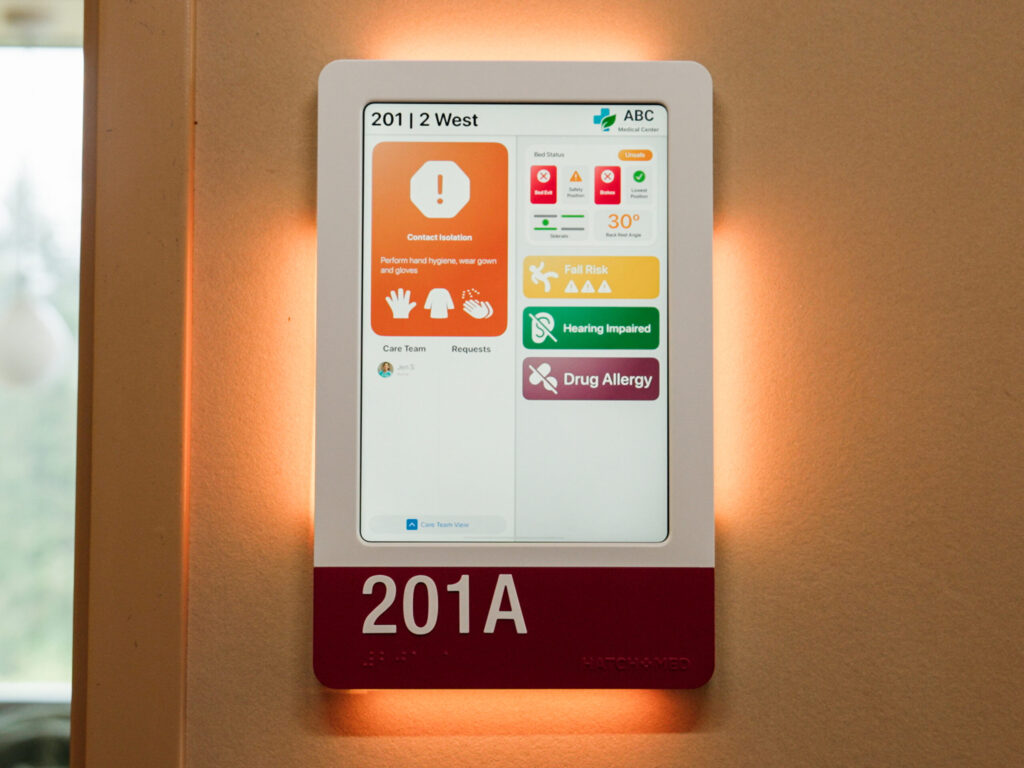
What is a digital door sign in a hospital?
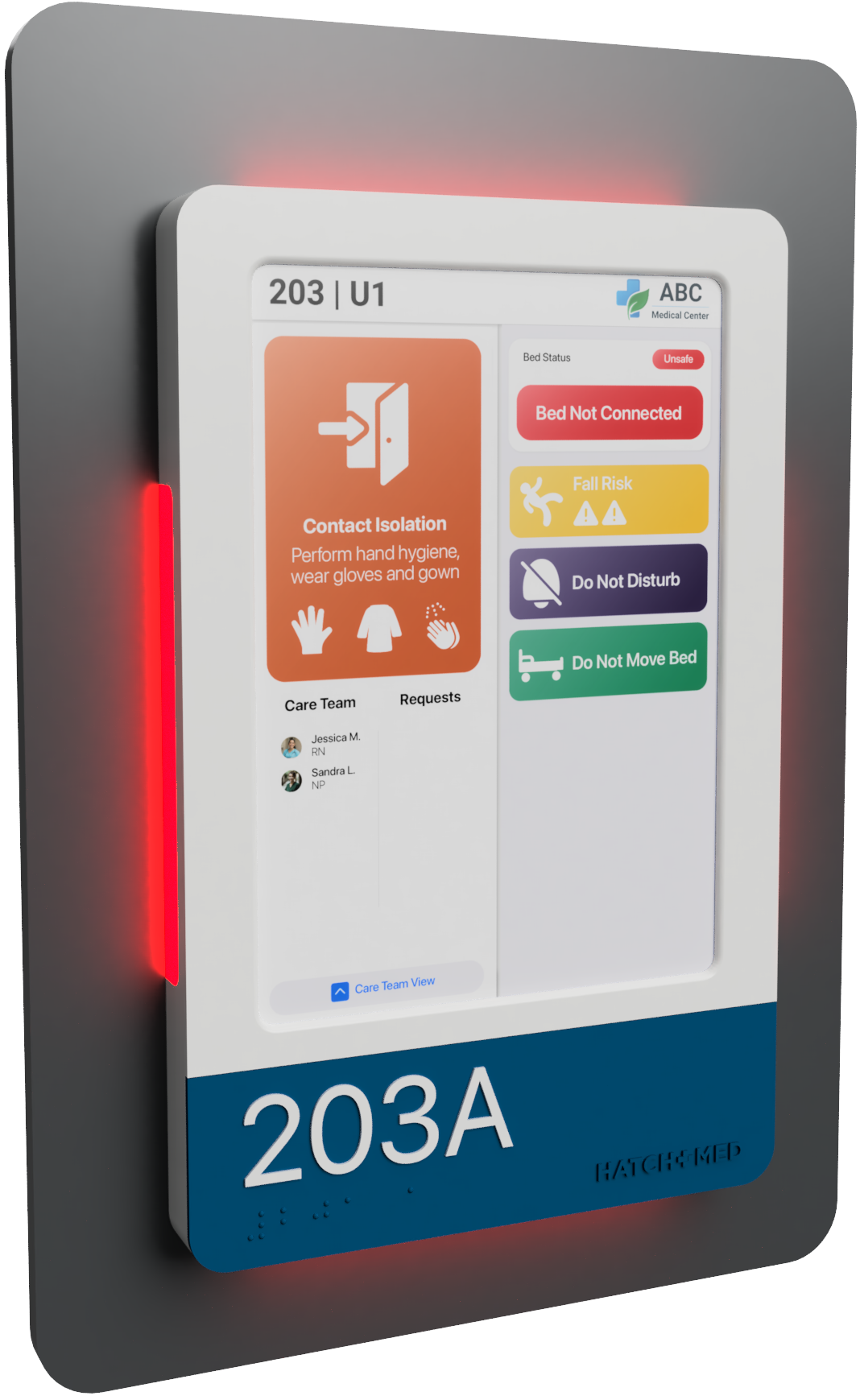
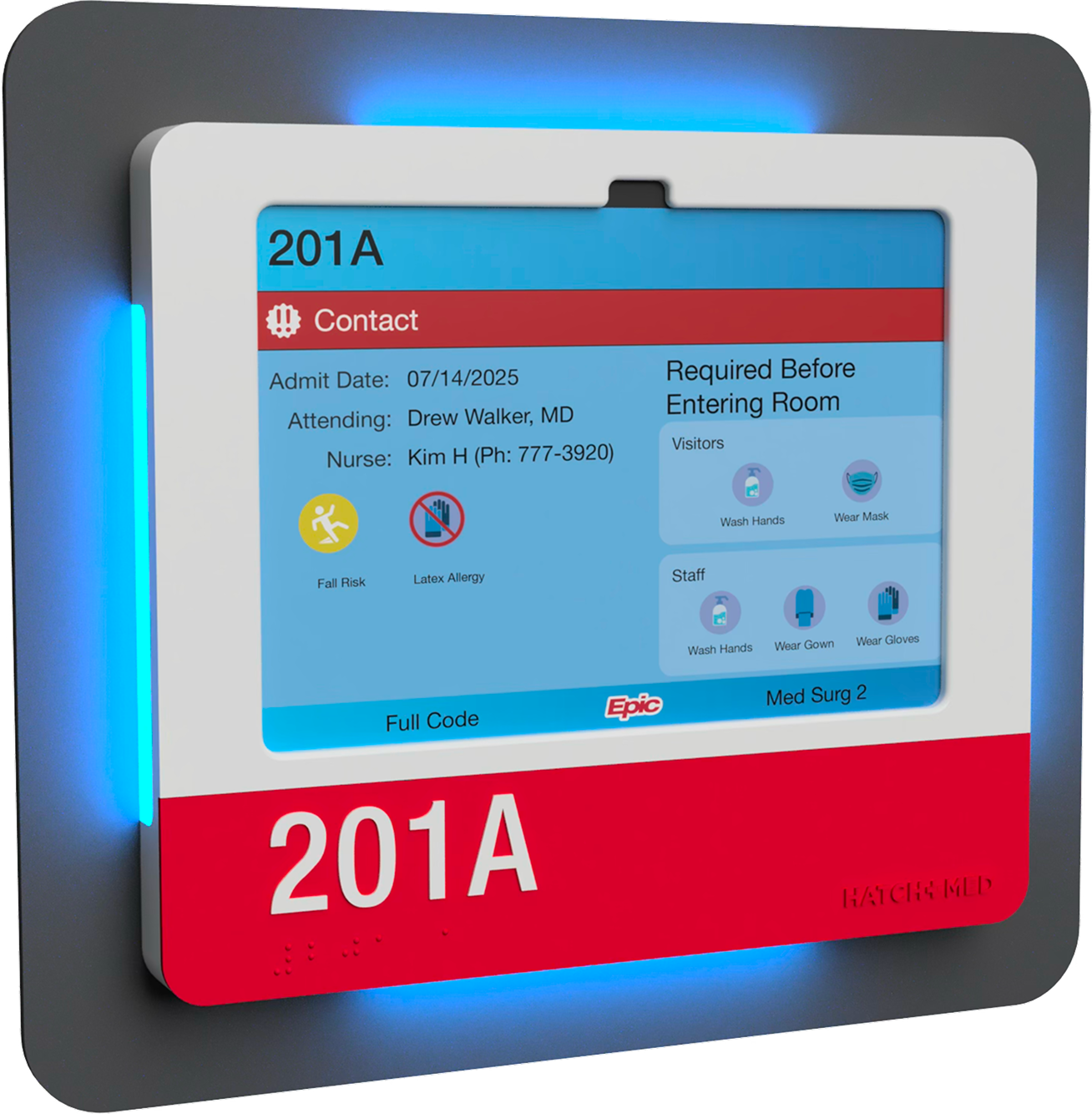
A hospital digital door sign is an electronic display mounted outside a patient room (or procedural area) thA digital door sign is an electronic display mounted outside a patient room or procedural area that shows room- and patient-specific information in real time.
Depending on hospital workflows and privacy policies, digital signs may display:
- Room number and unit
- Patient name or initials
- Preferred patient name
- Care team members and roles
- Isolation precautions and required PPE
- Fall risk or NPO status
- Rounding schedules
- Patient-facing communication messages
- Workflow indicators and room status updates
Unlike static paper signs, digital displays automatically update as information changes inside the hospital’s systems.
The most effective digital signage solutions are designed for quick, glanceable understanding, especially during busy shift changes, rapid response situations, or patient transfers.
Why Hospitals Are Moving Away From Paper Door Signs
Traditional patient room signage creates several ongoing challenges for healthcare facilities:
- Manual updates that consume nursing and staff time
- Inconsistent information between systems and signage
- Communication delays between departments
- Paper waste and printing costs
- Limited visibility into room status changes
- Hardware that is difficult to scale or manage
In healthcare environments where communication directly impacts patient care, outdated paper workflows can quickly become operational bottlenecks.
Communication failures are linked to nearly 70% of serious adverse events in healthcare (The Joint Commission), making real-time visibility and accurate room communication increasingly important for hospitals focused on patient safety and operational efficiency.
Paper signage also creates avoidable administrative burden. Staff members often need to manually replace room information multiple times throughout the day, especially during admissions, discharges, transfers, and shift changes.
As healthcare organizations continue prioritizing workflow efficiency and sustainability initiatives, many are looking for ways to reduce repetitive manual tasks, unnecessary printing, and communication gaps across care teams.
EMR-Driven Digital Signage Creates Real-Time Visibility
Modern digital door signage connects directly to the hospital’s EMR and patient flow systems, often using ADT (admission, discharge, transfer) feeds to automatically update room information in real time.
This eliminates the need for staff to manually update paper signage throughout the day.
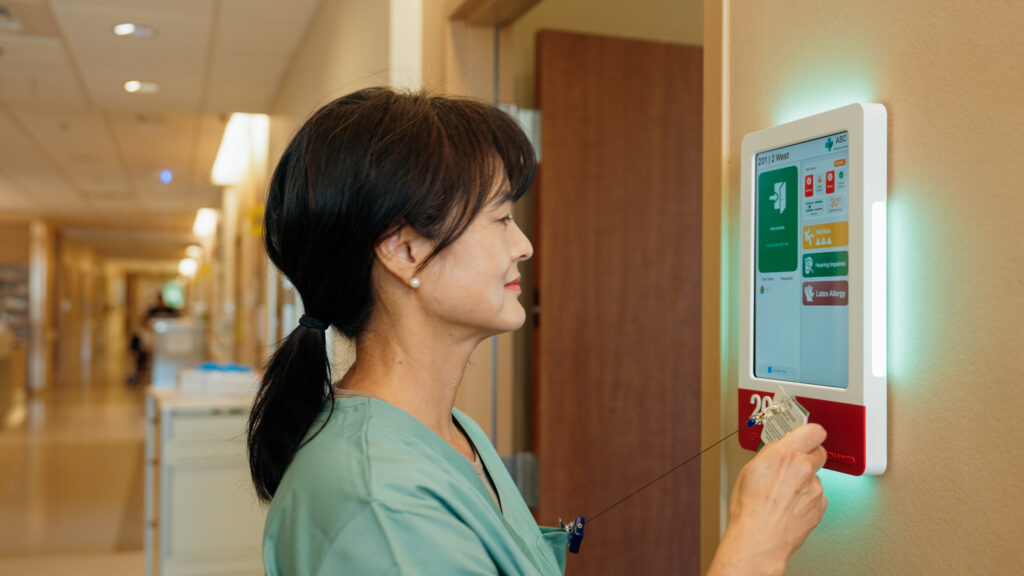
Common automated updates include:
- Patient admissions and room assignments
- Bed changes and transfers
- Isolation precautions and PPE requirements
- Care team assignments
- Provider-on-call information
- Workflow and room status indicators
Real-time visibility helps reduce communication gaps between departments while ensuring critical room information remains accurate and immediately accessible to staff.
For hospitals already focused on improving throughput, patient flow, and interdisciplinary coordination, digital signage becomes an extension of the connected care environment.
Why Healthcare Organizations Are Choosing iPads for Digital Signage
iPads have emerged as one of the preferred platforms for healthcare digital signage because they combine simplicity, reliability, flexibility, and enterprise scalability.
Unlike traditional proprietary signage systems, iPads provide a familiar and user-friendly interface that works well for clinical environments.
Real-Time Content Updates
Using iPads allows for centralized control of displayed content. Facility managers and IT teams can inWith iPad-powered digital signage, healthcare organizations can centrally manage room communication across entire facilities.
Care teams and IT departments can instantly update:
- Patient room information
- Care team assignments
- Isolation precautions
- Room status indicators
- Workflow notifications
- Patient communication messages
This creates:
- Faster communication
- Reduced manual errors
- Better operational visibility
- Improved staff coordination
- More efficient room workflows
When connected to the EMR, room information can automatically update in real time without requiring manual intervention from staff.
Better Experiences for Patients, Families, and Staff
Digital signage doesn’t just improve operations. It also improves the patient experience.
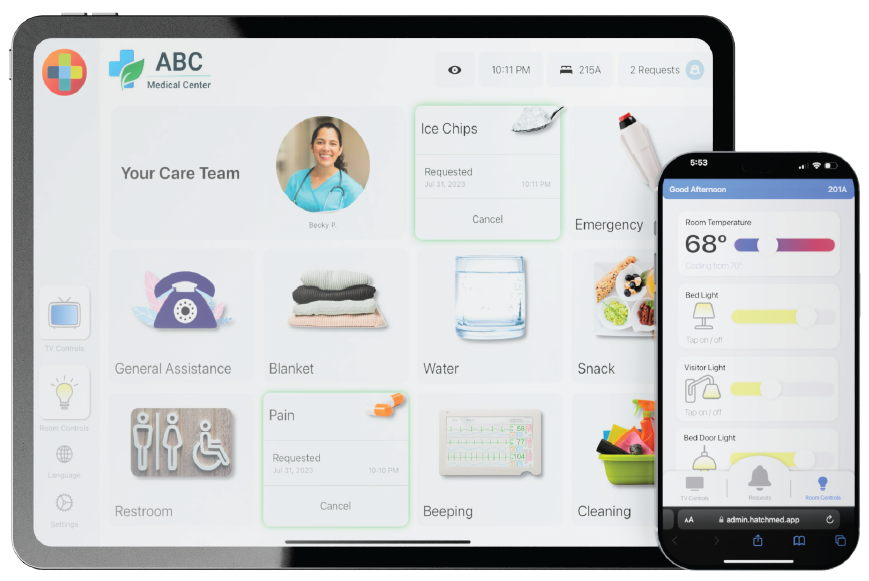
Patients who feel informed and connected to their care consistently report higher satisfaction with their hospital experience. Clear communication reduces confusion for patients and visitors while creating a more modern, reassuring care environment.
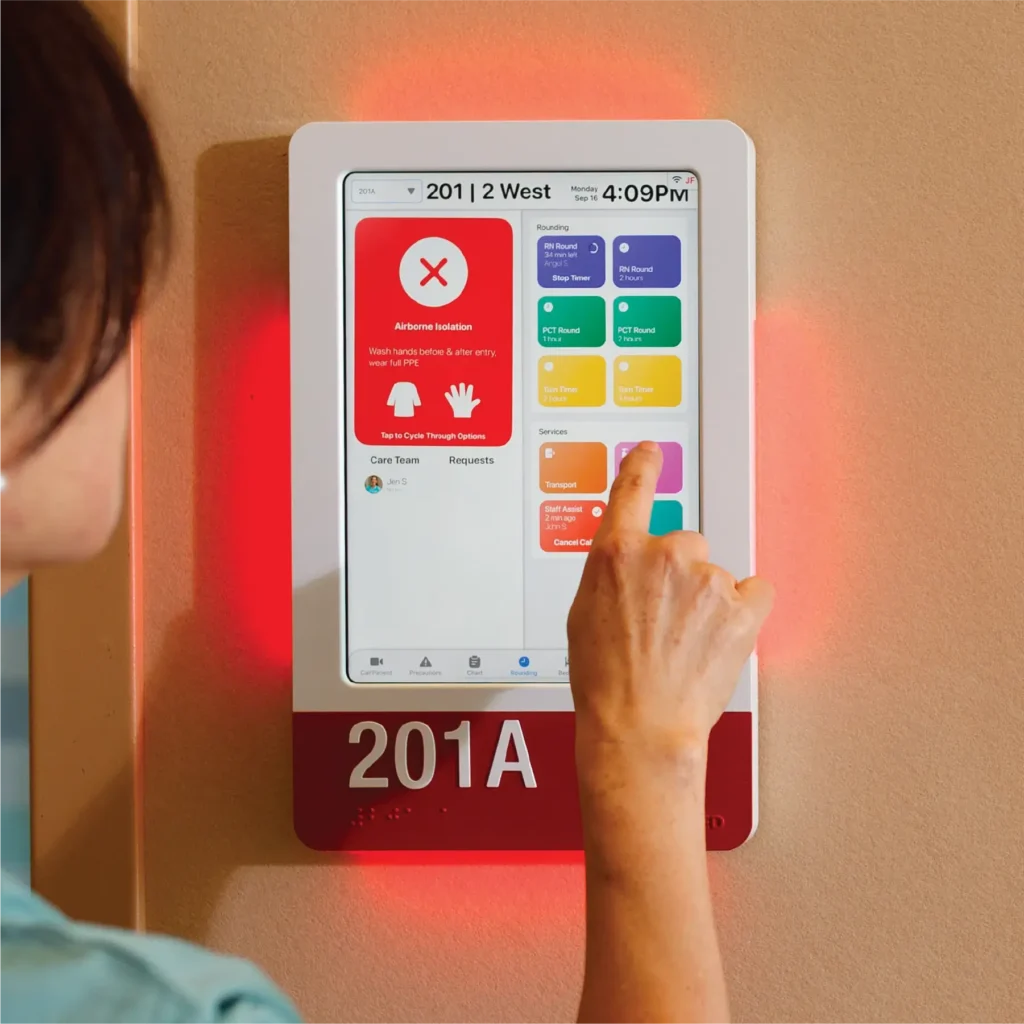
Interactive touchscreen displays can help:
- Improve communication transparency
- Reduce confusion around room status
- Support better wayfinding
- Reinforce patient-centered care
- Enhance overall patient experience
The familiar iPad interface also minimizes training requirements for clinical and IT teams, making deployment easier across healthcare systems.
Healthcare Technology Modernization Is Accelerating
FHospitals across the country are continuing to invest in connected care technologies that improve communication, operational visibility, and patient engagement.
In fact, the global smart hospitals market is projected to grow significantly over the next decade as health systems prioritize connected workflows and digital transformation initiatives (Fortune Business Insights).
Digital room signage is increasingly becoming part of broader smart hospital initiatives focused on:
- Real-time communication
- Connected workflows
- Centralized content management
- Patient-centered care experiences
- Reduced operational overhead
- More scalable healthcare technology infrastructure
As health systems modernize care environments, static paper signage no longer aligns with the speed and flexibility required in today’s hospitals.
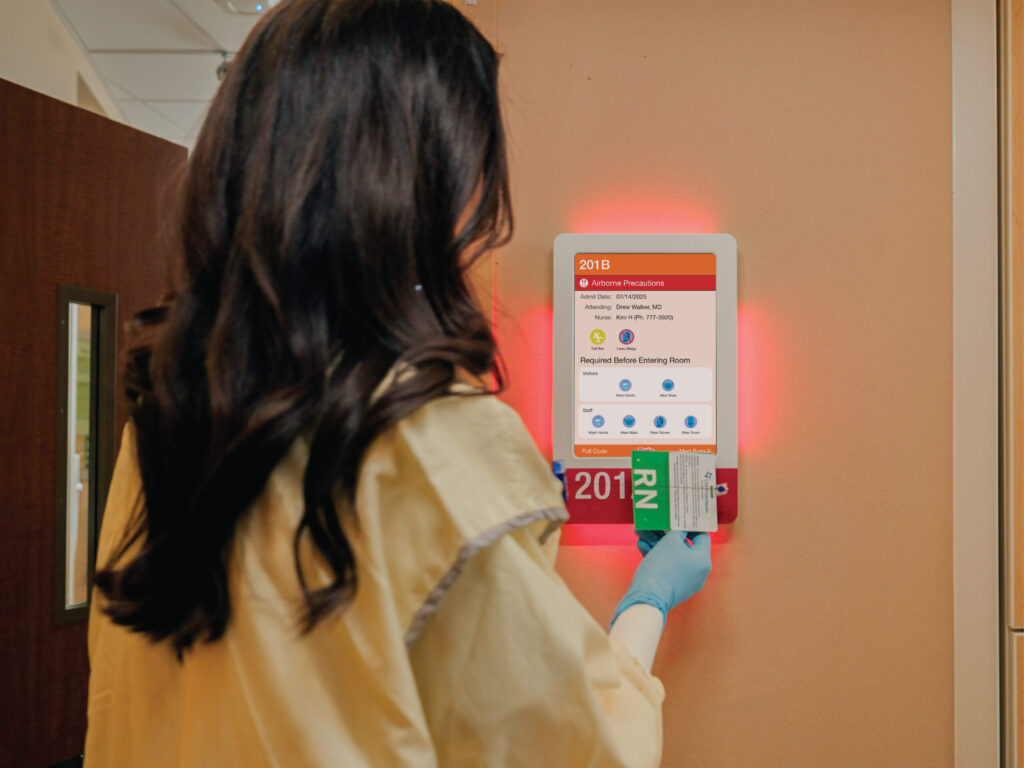
Why HallMonitor Is the Best Hardware for iPad Patient Room Signage
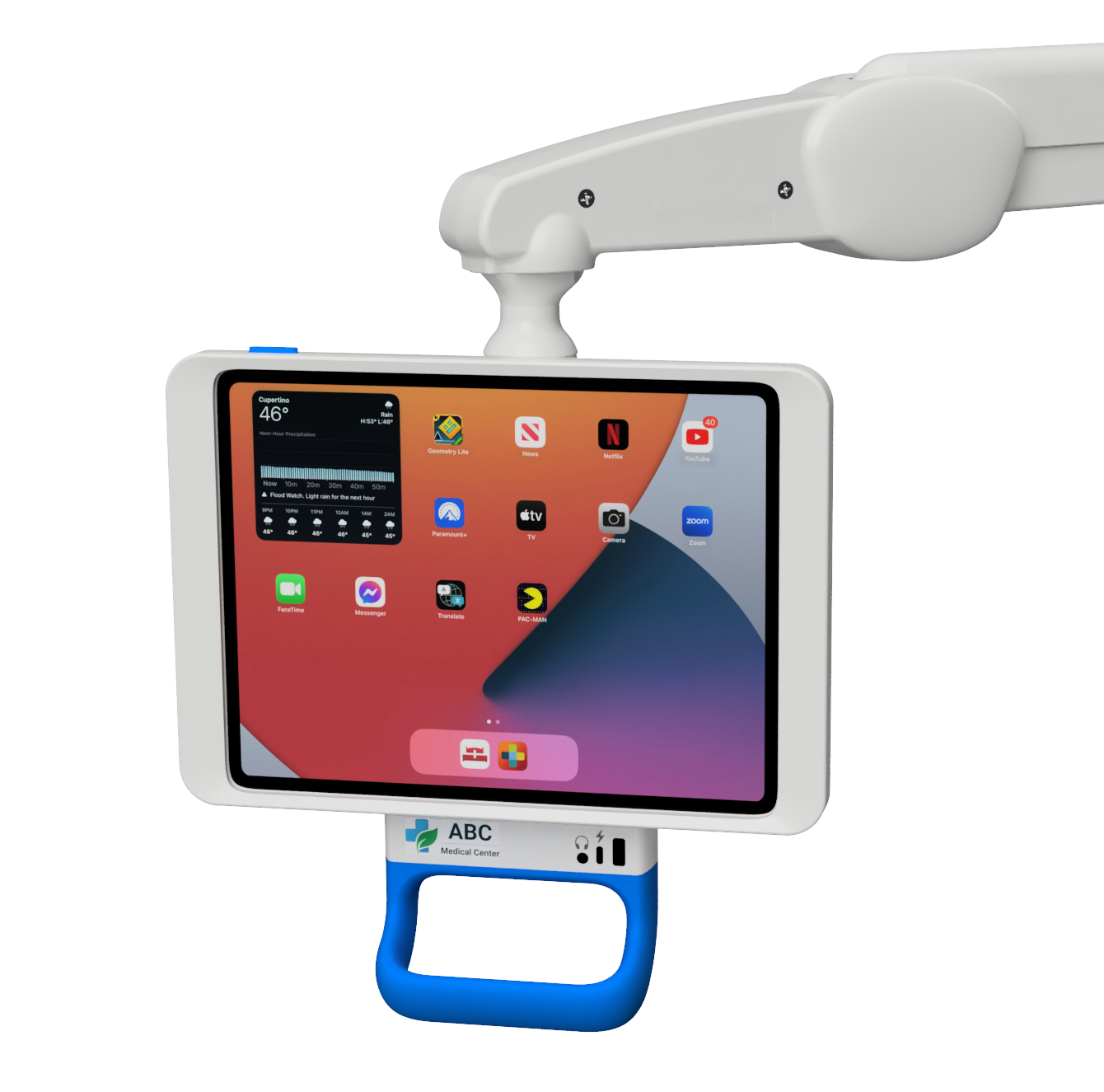
While iPads provide the software and display foundation, HallMonitor delivers the purpose-built hardware needed for healthcare environments.
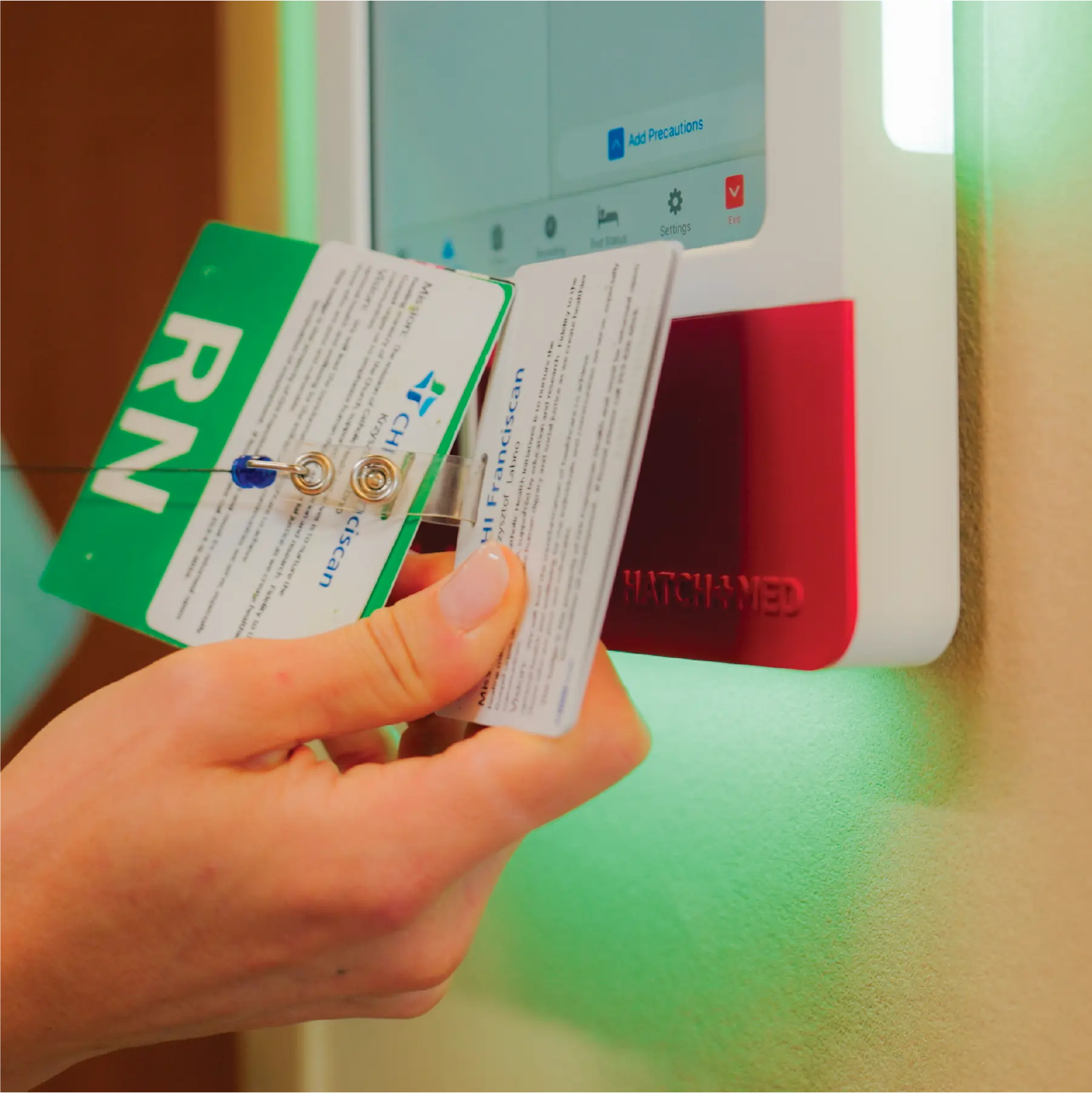
HallMonitor transforms standard iPads into secure, enterprise-grade patient room signage displays designed specifically for hospitals and clinical settings.
Purpose-Built for Healthcare
HallMonitor hardware is designed to meet the unique demands of healthcare facilities, including:
- Secure wall-mounted installations
- Clean, modern aesthetics
- Durable healthcare-ready construction
- Reliable power management
- Scalable deployments across entire facilities
Seamless iPad Integration
HallMonitor is optimized specifically for iPad digital signage deployments, making installation and management significantly easier for healthcare IT teams.
The result is:
- Faster implementation
- Reduced maintenance complexity
- Consistent performance
- A future-ready signage platform
How Hospitals Can Transition to Digital Door Signage
Transitioning to iPad-powered digital signage is often simpler than healthcare organizations expect.
Evaluate Existing Signage Workflows
Start by identifying current communication challenges and operational inefficiencies.
Consider:
- Manual room update processes
- Staff communication pain points
- Patient experience goals
- Integration requirements
Select the Right iPad Platform
Choose devices based on:
- Compatibility with existing systems
- Display size
- Screen clarity
- Power requirements
3. Deploy Secure Healthcare-Grade Hardware
Healthcare environments require more than consumer-grade mounting solutions.
HallMonitor hardware provides:
- Secure installation
- Clean cable management
- Continuous power support
- Professional patient room aesthetics
4. Integrate with your EMR
Connecting digital signage to the EMR allows hospitals to display real-time room information automatically, including:
- Workflow indicators
- Patient names
- Care teams
- Isolation precautions
- Room status updates
5. Centralize Content Management
Facility managers and IT teams can manage signage organization-wide from a centralized platform, enabling faster updates and more consistent communication across departments.
The Future of Healthcare Signage Is Digital
HeHealthcare organizations no longer need to rely on outdated paper signage or expensive proprietary display systems.
With iPads, real-time EMR integrations, and HallMonitor hardware, hospitals can create a streamlined digital signage strategy that improves communication, reduces administrative burden, enhances operational efficiency, and modernizes the patient experience.
The future of patient room communication is connected, scalable, and real time.
And it’s already happening.
