



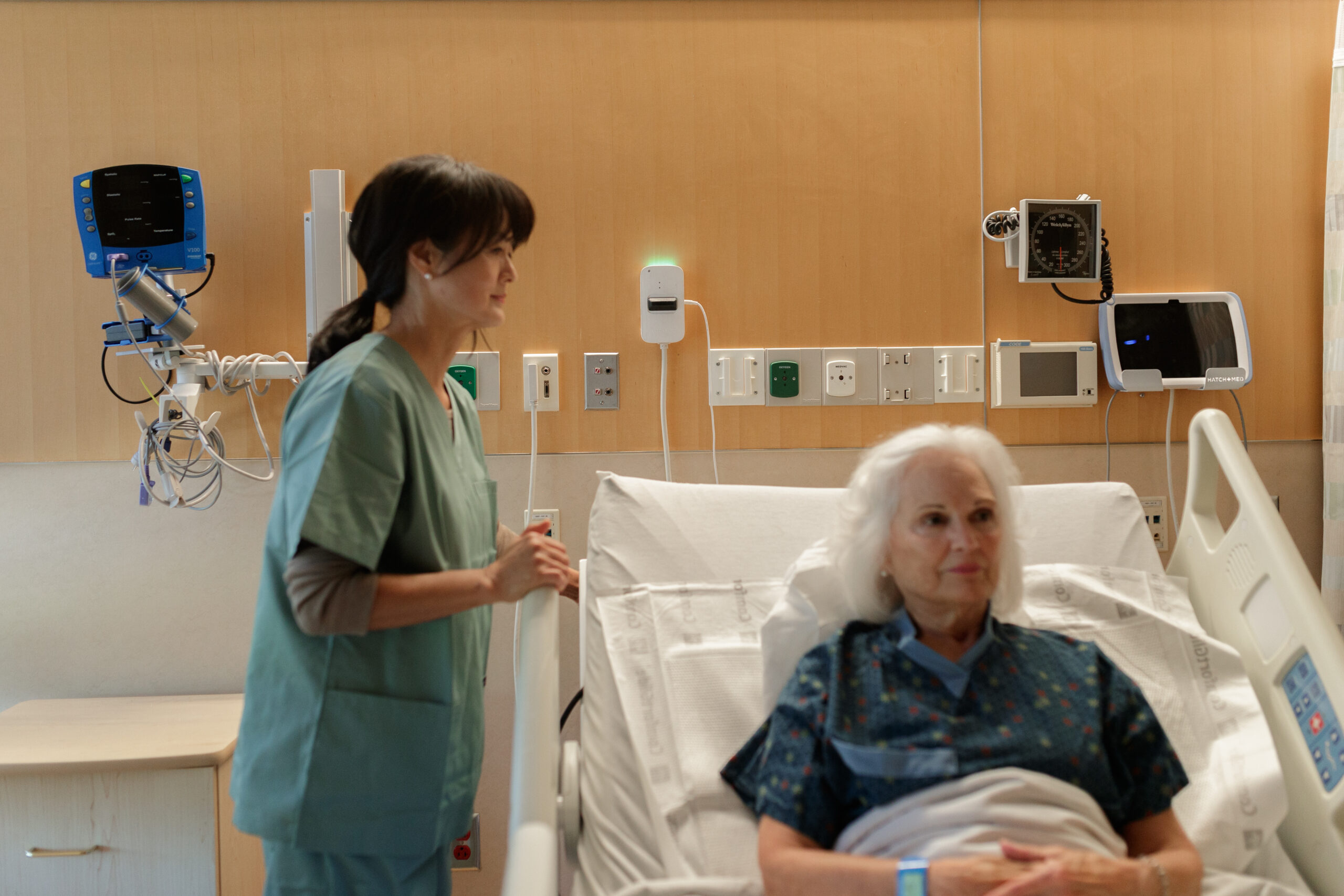
The pilot was a success. Leadership loved it. Clinicians saw the potential. Someone probably called it “the future of healthcare.” Great. Now do it 1,000 more times.
With the beds, nurse call systems, and EHR infrastructure already in place. Without shutting down entire units. And without creating an implementation nightmare for IT and facilities.
That’s where smart room programs face their real test. A successful pilot proves the technology works. Scaling it requires a repeatable deployment strategy that accounts for infrastructure, clinical operations, staffing, and cost.
The goal isn’t to recreate a showroom in every patient room. It’s to make connected technology practical enough to deploy, support, and expand across an operating hospital.
The Smart Room Pilot Trap
A pilot room gets special treatment. It has dedicated resources, carefully configured integrations, and an implementation team focused on making everything work exactly as intended.
Expanding beyond that controlled environment introduces a different set of challenges.
Can the same solution work across buildings with different infrastructure? How much installation time will each room require? Can facilities teams complete the work without interrupting patient care? What happens when IT needs to support hundreds of devices instead of a handful?
These aren’t questions to answer after leadership approves a systemwide deployment. They’re the questions that determine whether the project is ready to scale.
A hospital with 1,000 patient rooms doesn’t necessarily need 1,000 identical installations. It needs a deployment model that can accommodate differences between rooms without requiring a custom implementation every time.
Smart room scalability starts with operational planning, not hardware procurement.
1. Plan for the Hospital You Actually Operate
Before expanding a smart room pilot, IT and facilities teams need a clear picture of the environment they’re deploying into.
That means identifying the systems, connectivity requirements, and physical constraints that could affect installation. Different buildings may have different generations of nurse call equipment, networking configurations, and room layouts. Even within the same hospital, an installation that works in one unit may require adjustments in another.
A practical deployment assessment should answer several questions:
- Compatibility: Which existing systems and devices are supported, and where are additional integrations required?
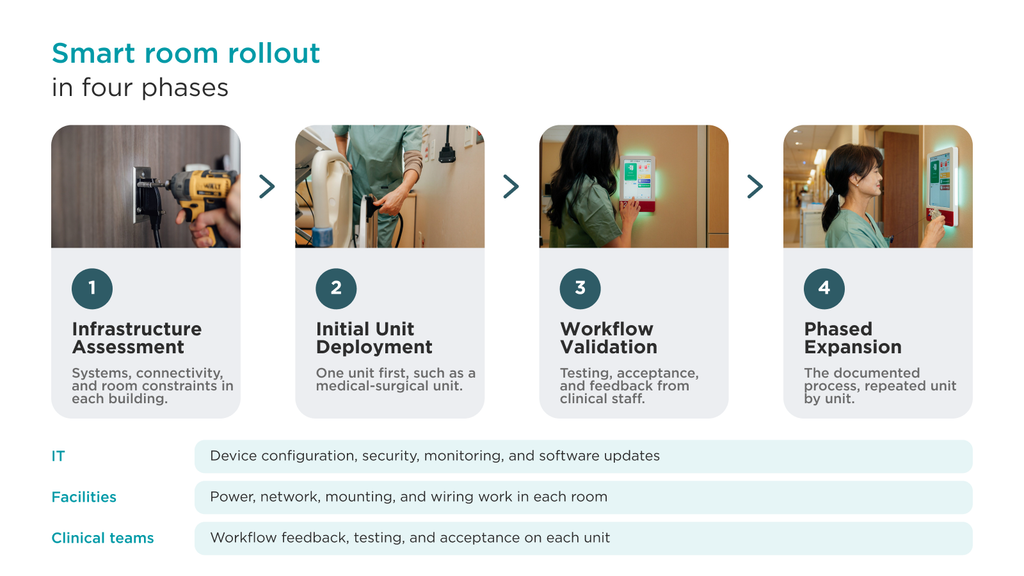
- Installation: What power, network, mounting, or wiring work is necessary in each room?
- Operational disruption: Can installation happen while a unit remains active, or will individual rooms need to be temporarily unavailable?
- IT requirements: How will devices be configured, secured, monitored, and maintained?
- Long-term support: Who owns troubleshooting, software updates, and ongoing infrastructure changes?
These details influence more than installation costs. They determine how quickly hospitals can deploy technology, which teams need to be involved, and whether the process can be repeated across multiple facilities.
Where possible, hospitals should evaluate solutions that minimize infrastructure changes and work with supported equipment already installed. We’ve covered the value of that approach in more detail in our previous article on connected hospital technology.
For a large-scale rollout, the next question is how to turn that compatibility into an efficient implementation process.
2. Build a Rollout Plan That Doesn’t Interrupt Patient Care
Hospitals don’t get to stop operating because IT has a deployment schedule.
Patient rooms need to remain available, clinical teams need predictable workflows, and facilities departments have ongoing maintenance responsibilities. A smart room implementation has to work around those realities.
Rather than treating deployment as one massive installation project, hospitals can phase implementation by unit, facility, or clinical priority.
For example, an initial rollout might focus on one medical-surgical unit before expanding to additional departments. That first deployment can establish realistic installation requirements, identify integration issues, and give clinical staff an opportunity to provide feedback before the next phase begins.
The important part is building a process that becomes easier to repeat.
That means standardizing device configurations, documenting installation procedures, establishing a testing and acceptance process, and coordinating schedules between IT, facilities, nursing leadership, and vendors.
Hospitals should also determine what can be prepared before technicians enter a patient room. Preconfigured devices, validated connections, and standardized installation materials can reduce the amount of work required at the bedside.
Make installation requirements part of the purchasing decision
Two technologies may offer similar clinical capabilities but require very different levels of installation effort.
One might require significant rewiring or equipment changes, while another may connect through supported existing infrastructure. At the scale of hundreds or thousands of rooms, those differences can affect project timelines, labor requirements, and total deployment costs.
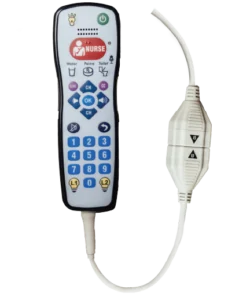
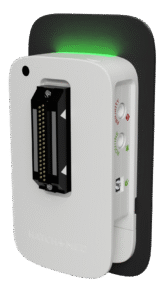
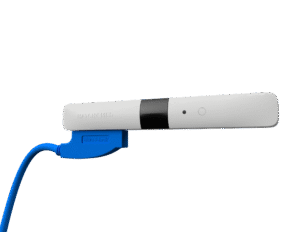
For example, HatchMed’s HighLightX uses existing nurse call connections to support compatible room technologies, reducing the need for changes to nurse call infrastructure.
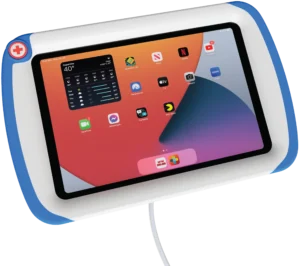
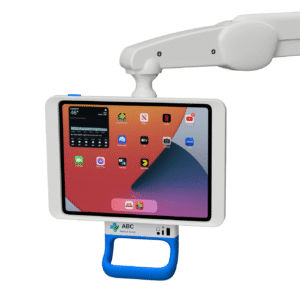
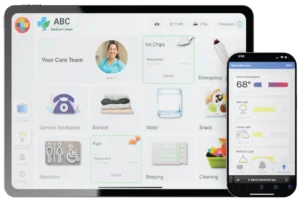
HatchMed’s ComCierge can extend patient room controls and requests to personal or hospital-provided devices, offering flexibility in how hospitals introduce bedside capabilities.
Neither example eliminates the need for implementation planning. But installation requirements should be evaluated alongside clinical features, not treated as a problem to solve after procurement.
3. Standardize the Process, Not Every Patient Room
Consistency matters in a large-scale deployment. But consistency doesn’t have to mean installing the exact same combination of technology in every room.
A medical-surgical unit may prioritize digital door signage and bed-status visibility. Another department may focus on patient controls and communication. Older facilities may have different infrastructure limitations than newly renovated buildings.
Trying to accommodate every variation with a completely different installation process can create unnecessary complexity.
Instead, hospitals can establish a standard deployment framework with configurable components.
That framework should define how devices connect, how configurations are documented, how integrations are tested, and how implementation teams verify that clinical workflows still function correctly.
Once the underlying process is established, additional capabilities can be introduced according to each facility’s needs and priorities.
The result is a more manageable environment for IT and facilities teams, with a consistent approach to deploying, supporting, and expanding connected room technology.
It also gives leadership a clearer picture of what future phases will require, making implementation costs and resource needs easier to forecast.
4. Measure the Work That Disappears
Here’s a metric that deserves more attention in smart room conversations: What work no longer needs to happen because the technology exists?
Hospitals routinely evaluate technology investments based on purchase price, implementation costs, and available features. But the operational value of connected rooms often comes from the repetitive tasks that disappear after deployment.
Consider the time clinicians spend manually checking patient information, updating room signage, or responding to requests that could be handled through connected technology.
Those individual tasks may seem minor. Multiply them across every shift, every room, and every day, and they become a meaningful operational burden.
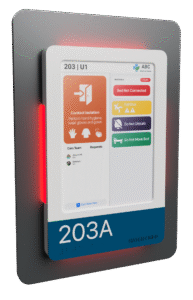
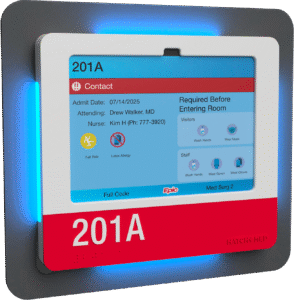
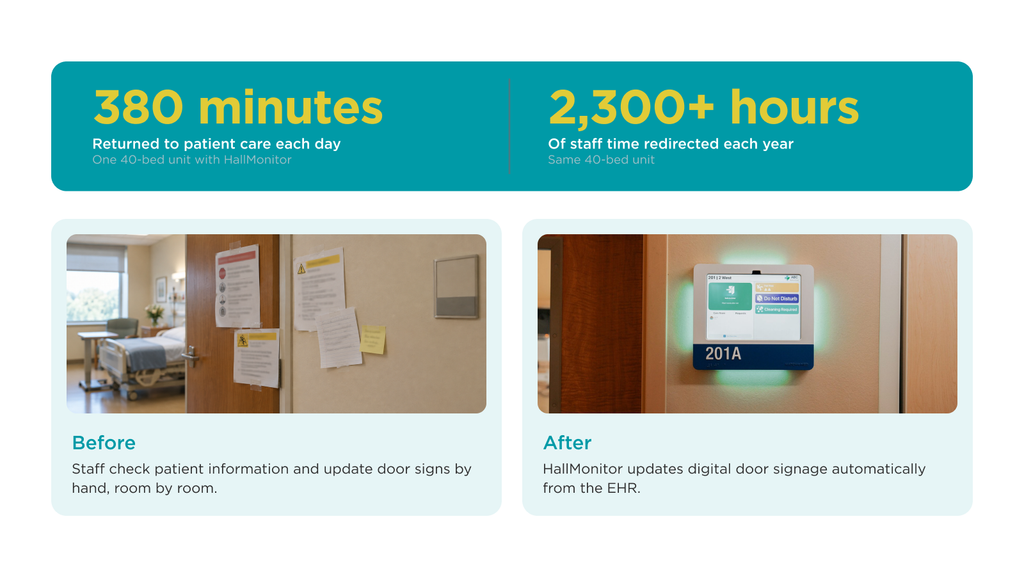
HatchMed has seen this in customer deployments of HallMonitor, which automatically updates digital door signage using EHR information.
According to HatchMed’s published customer data, a 40-bed unit saves approximately 380 minutes of staff time daily by reducing manual signage-related work. That represents more than 2,300 hours annually that can be redirected toward patient care.
The outcome isn’t simply a more modern-looking doorway. It’s less time spent maintaining information manually.
Build measurement into each rollout phase
Before expanding beyond the pilot, hospitals should establish baseline measurements and determine what successful implementation looks like.
That might include installation time per room, downtime requirements, support tickets, staff time spent on manual processes, or ongoing maintenance demands.
Track those measures during the first deployment phase and use the findings to inform subsequent installations.
If a unit sees fewer manual interventions but requires more technical support than anticipated, that information matters. If installation takes twice as long in an older building, the rollout plan needs to account for it.
Measuring operational outcomes helps hospitals understand both the value being created and the resources required to achieve it.
5. Scale With a Repeatable Implementation Model
Large health systems are already demonstrating what enterprise-wide smart room deployment looks like.
In 2026, AdventHealth began rolling out smart room technology across approximately 13,000 acute care rooms at 57 hospitals. The initiative includes digital whiteboards, door signage, and other connected technologies integrated with patient records.
According to Becker’s Hospital Review, AdventHealth had completed roughly 60% of installations by June 2026, with the goal of completing the rollout by the end of the year.
The project demonstrates the importance of coordinated implementation across facilities, clinical teams, and IT. AdventHealth’s deployment involves retrofitting existing rooms, supporting training and clinical adoption, and coordinating installations across multiple facilities.
Not every hospital needs to operate at that scale. But the same principles apply whether the next phase includes 50 rooms or 5,000.
A successful rollout requires more than compatible technology. It needs clear ownership, documented processes, realistic deployment schedules, and a way to measure whether each phase is delivering the expected results.
Your Hospital Doesn’t Need Another Showroom
The next phase of smart hospital innovation isn’t about proving that connected rooms are possible. It’s about making them practical to deploy across real healthcare environments.
That means accounting for aging infrastructure, limited installation windows, clinical workflow requirements, and the teams responsible for supporting the technology long after the initial launch.
For IT, facilities, and hospital leadership, the most important question isn’t how impressive the technology looks in a demonstration. It’s whether the organization can deploy it consistently, maintain it efficiently, and demonstrate measurable improvements as the project expands.
Because a smart room that works beautifully in Room 312 is only the beginning. The real opportunity is making it work across the rest of the hospital.
Planning a Smart Room Rollout?
Before expanding your pilot, make sure your installation strategy is ready for the realities of your hospital.
Talk with HatchMed about your existing infrastructure, integration requirements, and deployment priorities. We’ll help you evaluate how connected patient room technology can fit into your implementation plan.
