


Your Patient Room Is Full of Smart Tech. Why Doesn’t It Feel Smart?
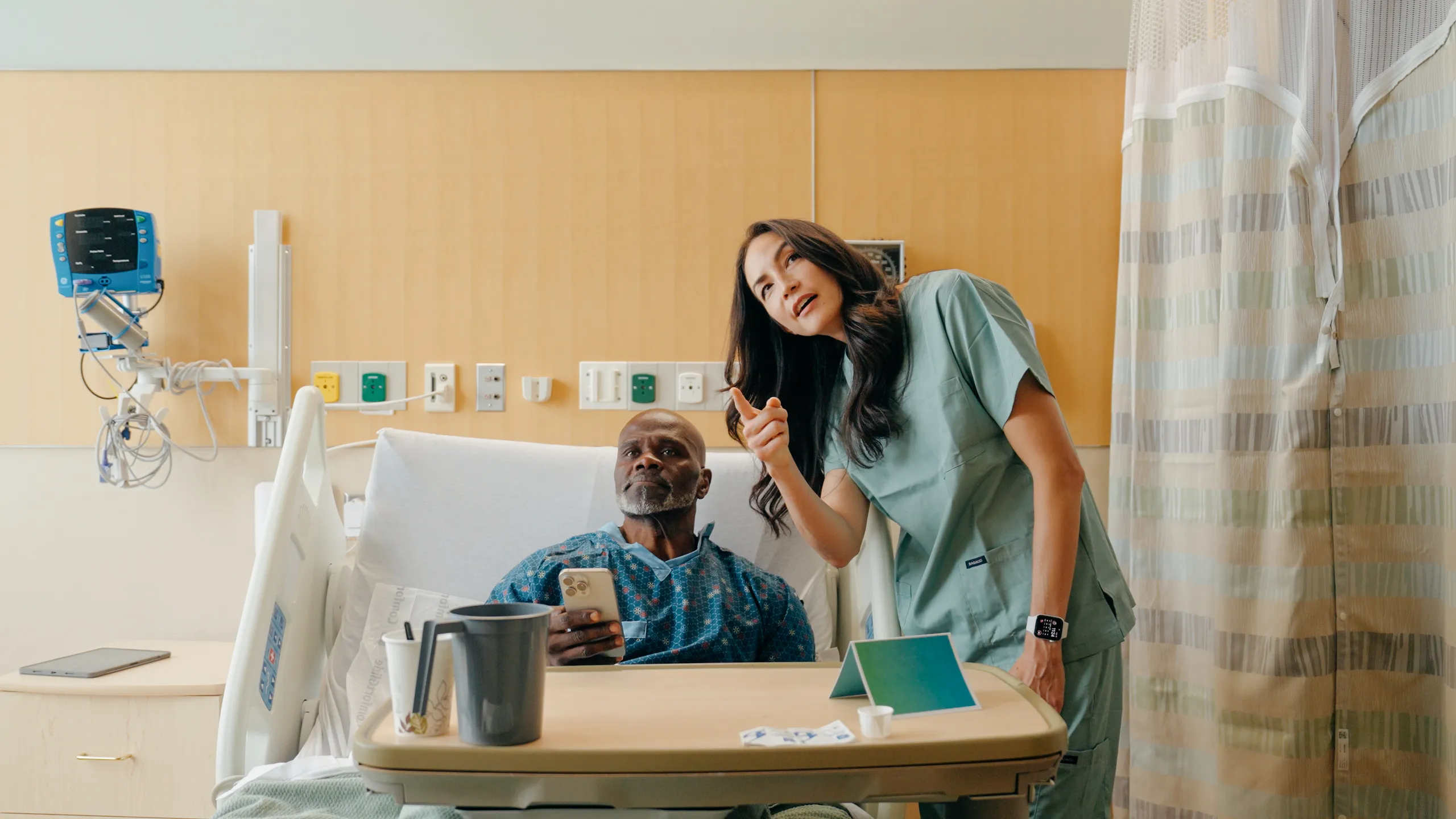
Walk into a modern hospital room and count the technology. A smart bed. Nurse call. A TV, a tablet, digital signage, and automated lighting.
Now watch the patient try to dim the lights. They reach for a pillow speaker, a design that has barely changed in decades. Meanwhile, the nurse leaving the room may have to crouch behind the bed just to confirm it’s connected to nurse call.
Having smart devices isn’t the same as having a connected patient room. Hospitals have invested heavily in technology, but too often, these systems still operate independently. A truly connected room should make information easier to access, technology easier to use, and everyday care simpler.
What Is a Connected Patient Room?
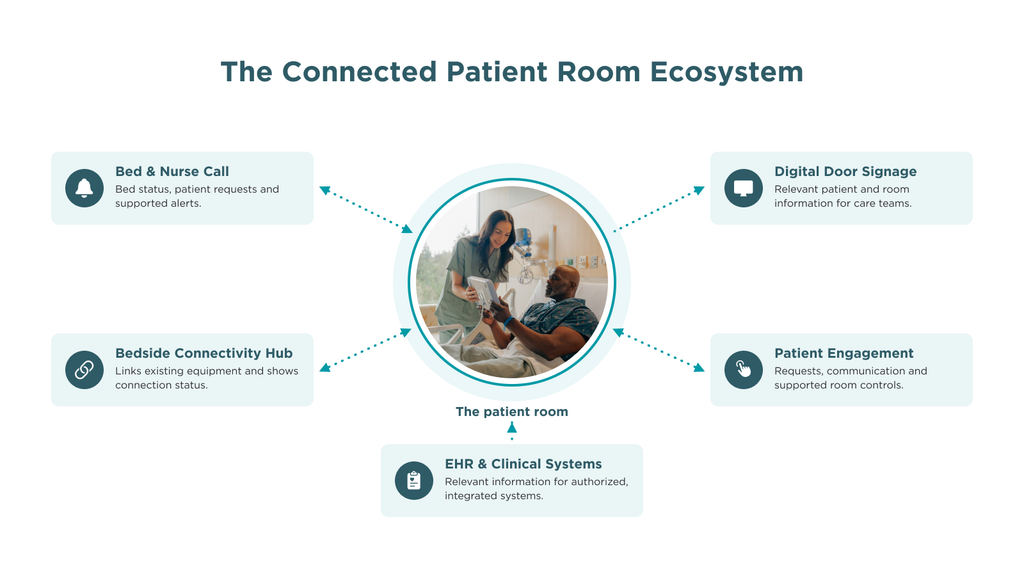
A connected patient room is a hospital environment where medical equipment, communication systems, digital interfaces, and room technologies work together to support patient care.
That might include hospital beds communicating with nurse call systems, digital signage displaying patient precautions, or patient interfaces controlling lighting and entertainment.
Most room technology works like the free router from your cable company. It does something important, lives where nobody looks, and gets attention only when it stops working. That’s fine for a router. It’s not fine for the connection carrying a bed-exit alarm.
As Kyrylo Keydanskyy, HatchMed’s Chief Product Officer, puts it:
“A smart room is one where the nurse walking down the hall already knows which room needs them.”
The Technology Behind a Connected Patient Room
A connected patient room isn’t built around one revolutionary device. It’s built around technologies that communicate effectively and solve real problems.
Hospital Beds and Nurse Call Connectivity
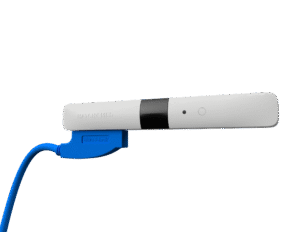
Beds get moved with cables still plugged in. It happens all the time, and traditional connectors can bend pins, damage wall ports, or disconnect without anyone noticing.
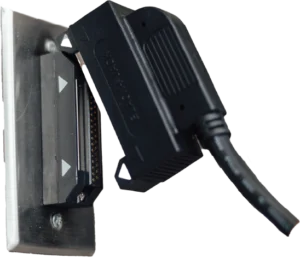
HatchMed’s BlackJack magnetic bed cable is built for that reality. Pull it sideways, and it separates cleanly instead of straining the connector. Click it back into place, and the physical connection is restored.
Bedside Connectivity Hubs
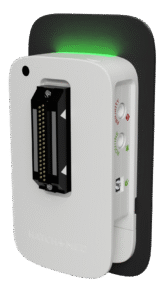
HatchMed’s HighLightX answers a simple question every nurse should be able to answer before leaving a room: Is the bed connected?
Green means connected. Red means attention is needed.
As Keydanskyy puts it, “If a light needs a cheat sheet, it’s decoration.”
Behind that simple indicator, HighLightX also functions as a nurse call smart hub, connecting compatible beds, nurse call infrastructure, digital signage, and patient devices.
Digital Door Signage
The paper sign taped to a hospital room door might be healthcare’s oldest status dashboard. It’s also often outdated the moment something changes.
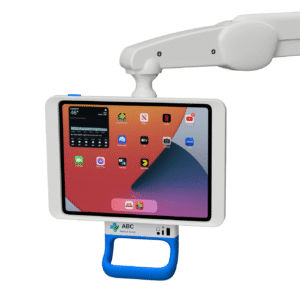
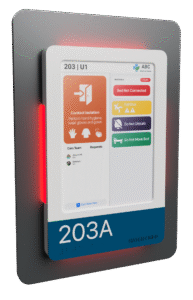
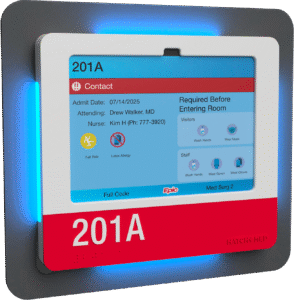
HatchMed’s HallMonitor offers another approach, displaying supported patient and room information through EHR integrations. Depending on the configuration, care teams can see information such as fall-risk precautions, isolation status, and room availability without relying on separate manual updates.
Patient Engagement and Room Controls
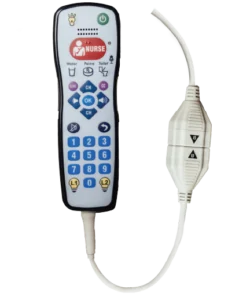
Hospitals spend significant money on smart lighting, televisions, and building systems. Then they hand patients a remote from another decade.
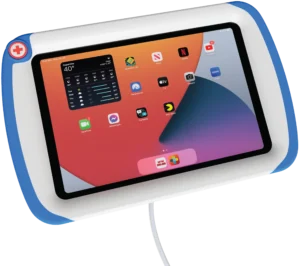
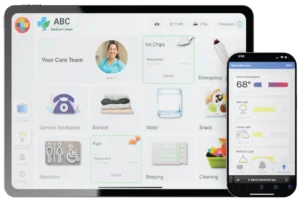
HatchMed’s ComCierge helps bridge that gap by connecting supported nurse call and room functions through hospital tablets or compatible personal devices. Patients gain more independence with everyday tasks, while clinical requests remain within established communication workflows.
What Does a Connected Patient Room Look Like in Practice?
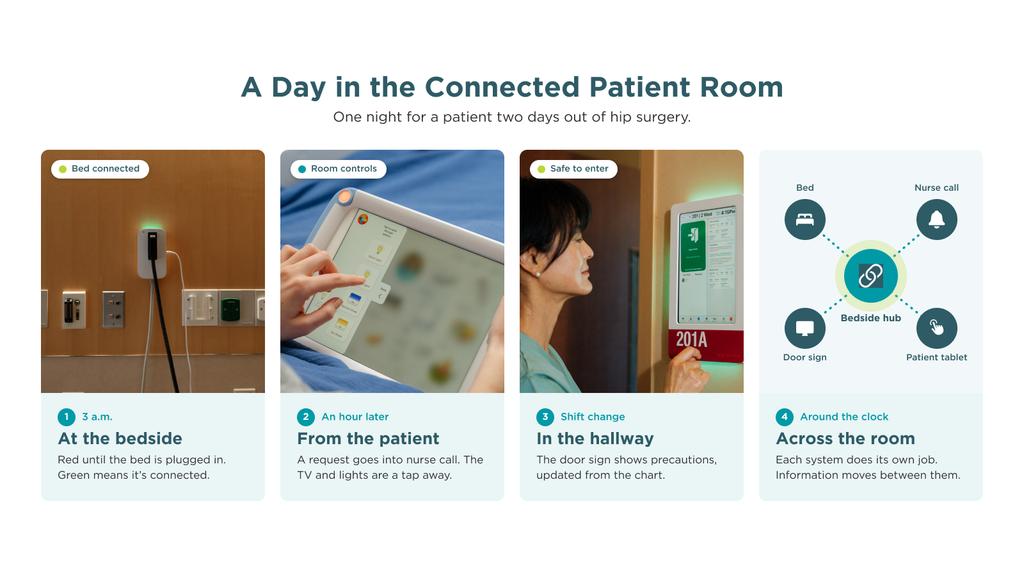
Picture a patient two days out of hip surgery.
At 3 a.m., the patient returns from a scan. The bed is rolled back into position, but its connection cable remains unplugged. A red indicator on the headwall makes the problem visible. Staff reconnect the bed, and the indicator turns green.
Later, the patient requests help getting to the bathroom through a supported digital interface. The request enters the existing nurse call workflow, not another application staff must monitor. Afterward, the patient turns off the television independently.
At shift change, the morning nurse sees the patient’s fall-risk precaution displayed on the digital door sign, updated through a supported clinical system integration.
No one had to check behind the bed, manage a separate communication platform, or rewrite a paper sign.
That’s what effective connectivity should accomplish.
Five Principles of an Effective Connected Patient Room
Not every technology integration makes a hospital room better. Before investing in another system, hospitals should ask five questions.
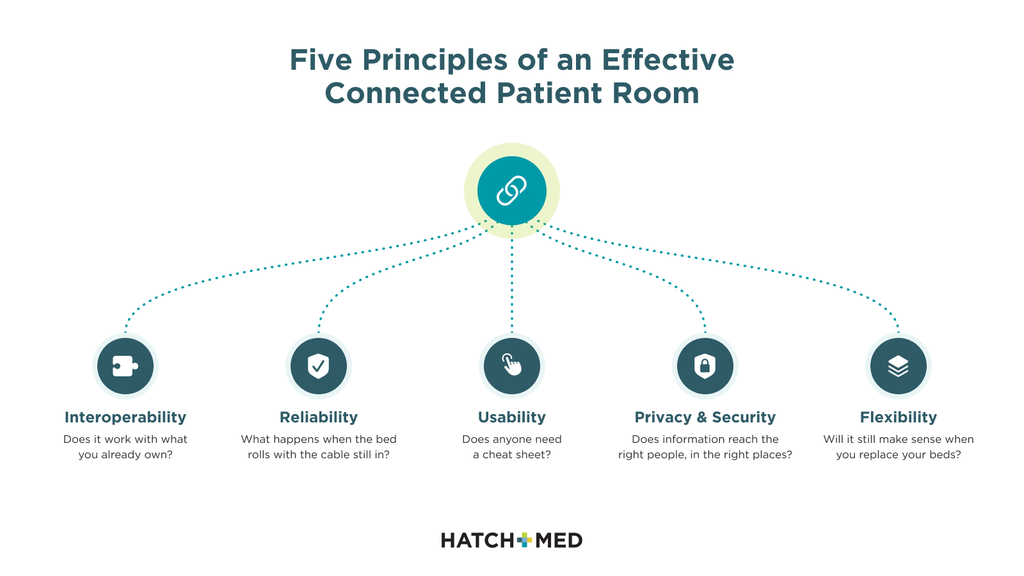
1. Interoperability: Does it work with what you already own?
Connected technology should integrate with compatible existing beds, nurse call systems, and hospital infrastructure without automatically requiring costly replacement projects.
2. Reliability: What happens at 3 a.m. when someone moves the bed?
Technology needs to withstand everyday clinical activity. Physical connections, system availability, and clear failure indicators all matter.
3. Usability: Does anyone need a cheat sheet?
Patients and care teams shouldn’t need extensive instructions for routine interactions. Useful technology makes important actions and information immediately understandable.
4. Privacy and security: Is information reaching the right people?
Connected systems must protect patient information through appropriate authentication, access controls, and thoughtful display configurations.
5. Flexibility: Will it still work when you replace your beds?
Hospital technology changes on different schedules. A flexible connectivity strategy should accommodate supported equipment upgrades without requiring the entire ecosystem to be rebuilt.
Hospitals planning construction or renovation should consider these principles early. Explore our guide to designing a connected patient room during renovation.
The Future of Connected Patient Rooms
Most smart-room pitches pop the hood and show you a beautiful engine. Nurses don’t want to admire the engine. They want to know the car starts.
The same principle applies to healthcare technology. Adding screens, applications, and features doesn’t automatically improve patient care. What matters is whether systems communicate effectively, staff can access relevant information, and patients can interact with their environment without unnecessary complexity.
Stop asking what else fits in the room. Start asking what the room should already know.
Connect Your Patient Room Technology With HatchMed
HatchMed helps hospitals connect existing patient room technology through solutions for bed and nurse call connectivity, digital signage, and patient engagement.
From HighLightX and BlackJack to HallMonitor and ComCierge, our solutions are designed to make existing technology work better together.
Explore HatchMed’s connected patient room solutions
Frequently Asked Questions
What is the difference between a smart hospital room and a connected patient room?
A smart hospital room contains advanced digital technologies. A connected patient room emphasizes how those technologies communicate and work together. A room can have smart devices without being fully connected.
How do connected patient rooms benefit nurses?
They can improve visibility into equipment status, reduce some manual information updates, and make relevant room information easier to access.
Can hospitals create connected rooms without replacing existing equipment?
Yes, in many cases. Compatible connectivity solutions can integrate existing beds, nurse call systems, and other technologies. Specific capabilities depend on equipment compatibility and integration requirements.
