



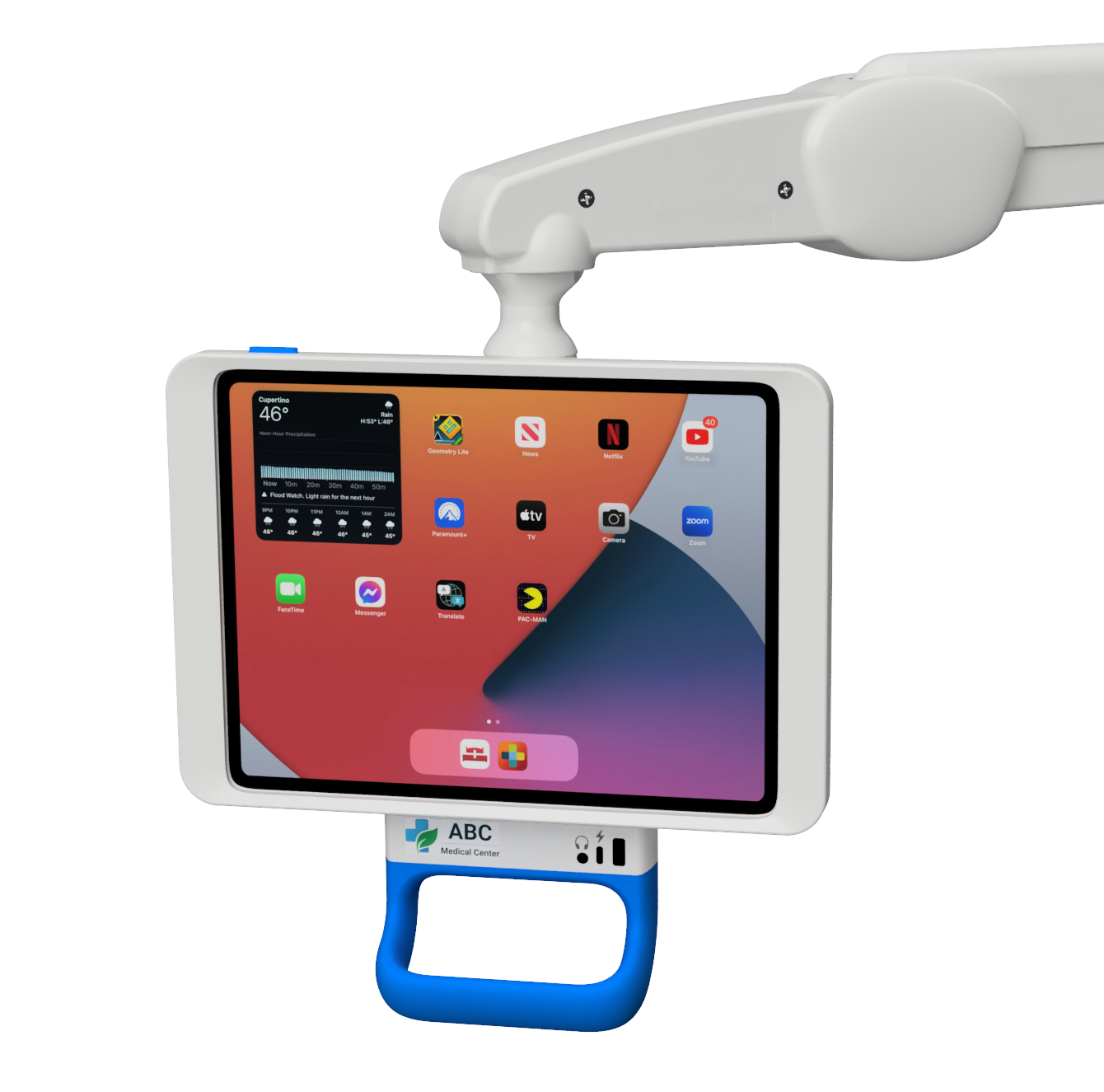

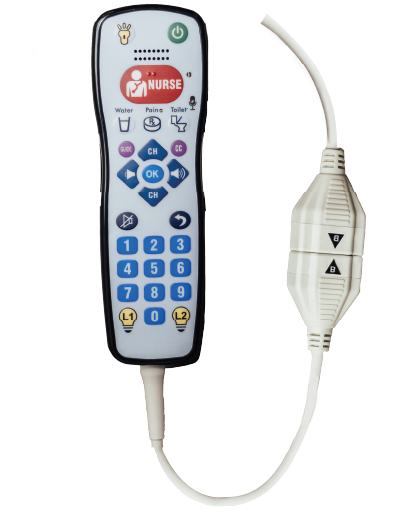
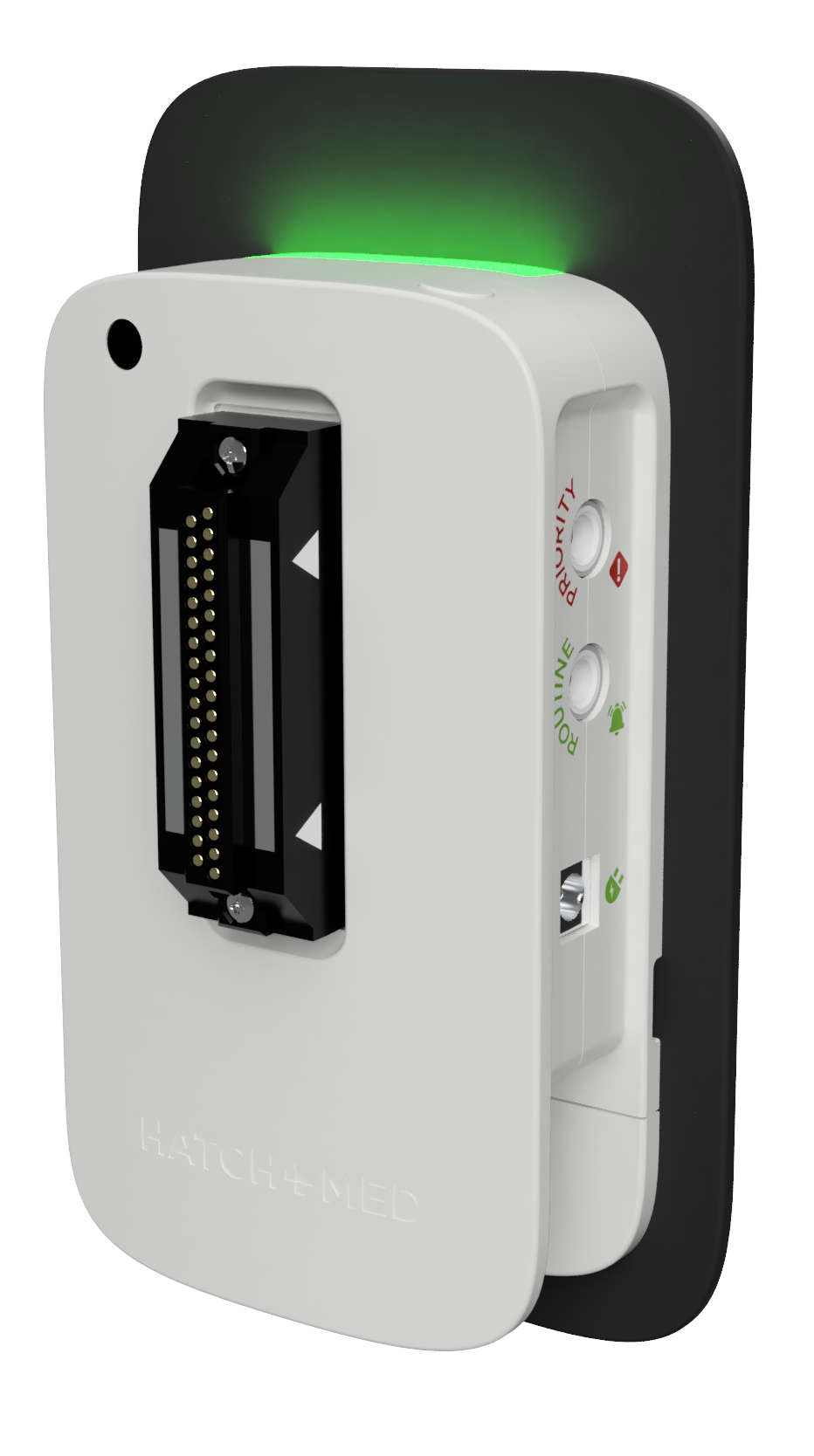

Walk into a modern hospital room today and you can usually tell whether the technology was added thoughtfully or simply layered on over time. Cords hang where they should not. Screens blink for attention. Alarms interrupt more than they help.
The best smart hospital rooms look different. They feel calmer. They make it easier for clinicians to do their jobs and easier for patients to feel safe and cared for.
In 2026, hospitals of the future are not chasing the newest device. They are building rooms that work the way people work. Here are the trends we see shaping smart hospital rooms right now, and why they matter.
Smart hospital rooms are becoming connected care spaces
For years, hospital rooms were filled one system at a time. Nurse call lived on the wall. Beds spoke one language. Digital signs spoke another. Clinicians were left to connect the dots themselves.
Today’s smart hospital rooms are being designed as connected care spaces. The room knows what is happening and shares that context across systems.
Leading hospitals are:
- Connecting nurse call, mobile devices, and EHR workflows
- Using context to route requests to the right person faster
- Reducing unnecessary alerts and interruptions
When systems work together, clinicians spend less time managing technology and more time caring for people. That is the goal.
Virtual nursing is becoming part of everyday care
Virtual nursing has moved well beyond pilot programs. Many hospitals now see it as a practical way to support bedside staff and create more consistency across care teams.
In smart hospital rooms, virtual nurses are woven into daily workflows. They help with admissions, discharges, patient education, and routine check-ins.
Hospitals designing for the future are:
- Integrating virtual nursing directly with nurse call and room workflows
- Using room awareness to resolve simple requests remotely
- Freeing bedside staff to focus on hands-on care
When virtual nursing works well, it feels less like technology and more like teamwork.
Ambient AI is entering the room with care and intention
Ambient AI is starting to show up in smart hospital rooms, especially to help reduce documentation time. These tools listen during clinical conversations and help generate draft notes.
Hospitals are taking a thoughtful approach here. The focus is not on replacing clinicians. It is on giving them time back.
What we are seeing:
- Strong clinical oversight and review processes
- Clear boundaries around privacy and data use
- A focus on accuracy and trust
Used well, ambient AI fades into the background. Clinicians stay present with patients, and paperwork becomes less of a burden.
Real-time location is powering safer, faster care
Real-time location systems are becoming a quiet backbone of smart hospital rooms. Knowing where people and equipment are in the moment helps hospitals respond faster and work more efficiently.
Forward-thinking hospitals are:
- Using location data to improve staff safety
- Routing requests to the closest qualified caregiver
- Reducing wasted steps and delays during busy shifts
Location awareness turns rooms from passive spaces into active participants in care.
Digital door signs and whiteboards are doing real work
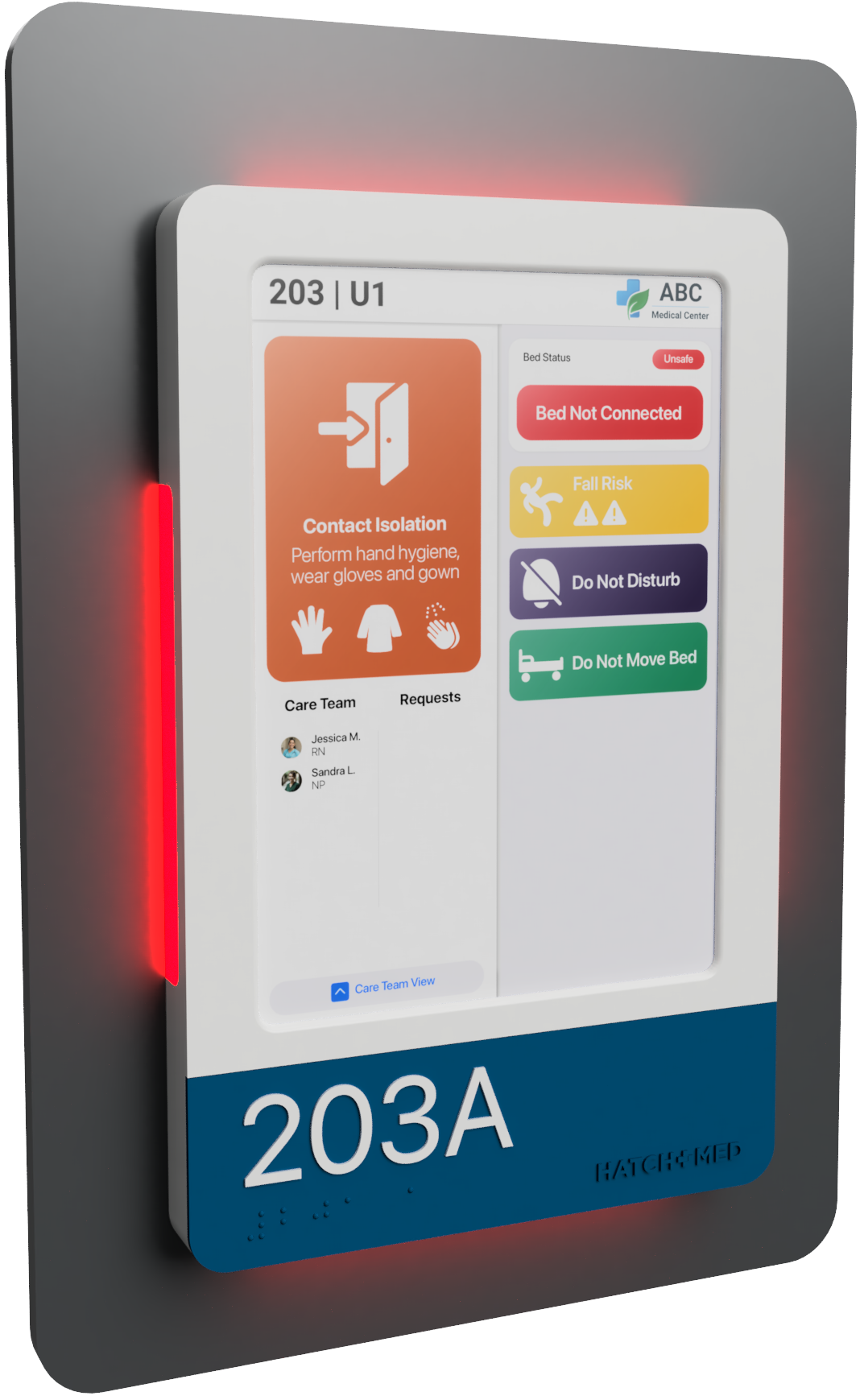
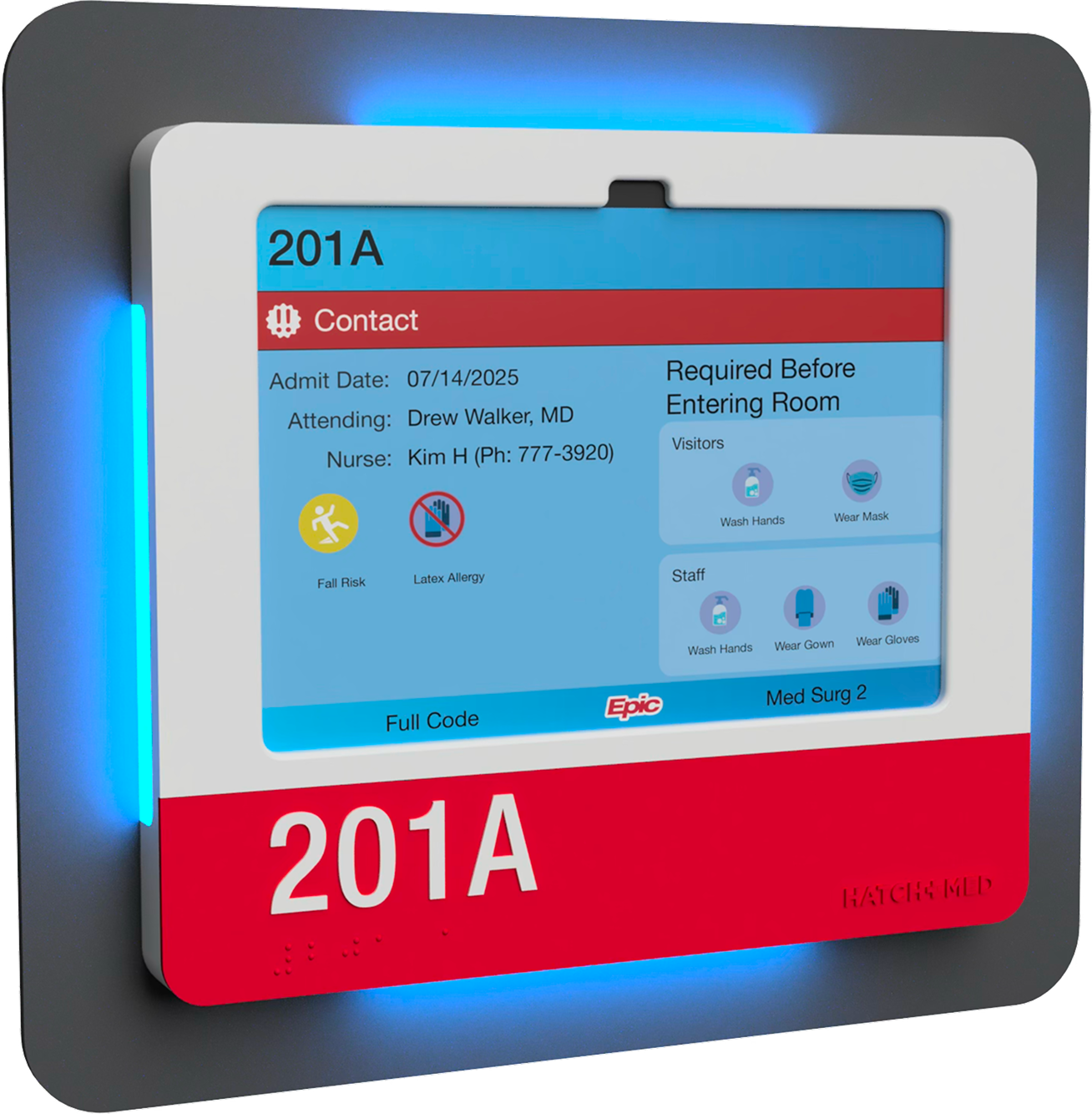
Digital door signs and whiteboards have come a long way from static displays. In smart hospital rooms, they act as shared sources of truth.
Hospitals are using them to:
- Show patient status and safety alerts in real time
- Make care team roles visible at a glance
- Reduce interruptions and unnecessary questions
When information is clear and current, everyone in the room can focus on the task at hand.
Smart hospital rooms are designed for clinicians, not just patients
Patient experience matters, but many hospitals are investing in smart rooms to support their workforce.
Smart hospital rooms are being designed to reduce mental load, cut down on interruptions, and remove small frustrations that add up over a shift.
Hospitals focused on people first are:
- Measuring response times and workload, not just satisfaction scores
- Reducing alarm noise and duplicate tasks
- Giving clinicians tools that fit naturally into their day
A room that supports clinicians supports patients too.
Security and reliability are built in from the start
As hospital rooms become more connected, security becomes part of patient safety. Hospitals are paying closer attention to how room technology is protected and how it behaves during downtime.
What we see in strong smart room programs:
- Clear expectations for vendor security practices
- Systems designed to fail safely
- IT and clinical teams working together from the beginning
Trust is earned when technology works reliably, even when things go wrong.
Smart rooms are shaped by real-world design, not just technology
The success of a smart hospital room often comes down to physical design. Where screens are placed. How alerts are seen or heard. How easily staff can move.
Hospitals are:
- Piloting room designs with frontline teams
- Testing workflows before scaling across units
- Planning for technology changes over time
Good design respects the reality of clinical work.
Hospitals are building smart room playbooks, not one-off rooms
One of the biggest shifts we see is standardization. Hospitals of the future are moving away from showcase rooms and toward repeatable, scalable smart room models.
They are:
- Creating reference designs for different unit types
- Defining training and support standards
- Treating smart rooms as evolving platforms
This approach makes it easier to grow, adapt, and improve over time.
Where smart hospital rooms are headed
The hospital of the future is not defined by a single screen or system. It is defined by how well the room supports the people inside it.
The best smart hospital rooms:
- Feel calm and intuitive
- Reduce friction for clinicians
- Help patients feel informed and safe
- Adapt as care models evolve
At their best, smart hospital rooms do not call attention to themselves. They simply make care work better.
That’s what designing with humans in mind looks like.
