




A Red Dot Award-Winning Digital Door Sign for Hospitals and Health Systems
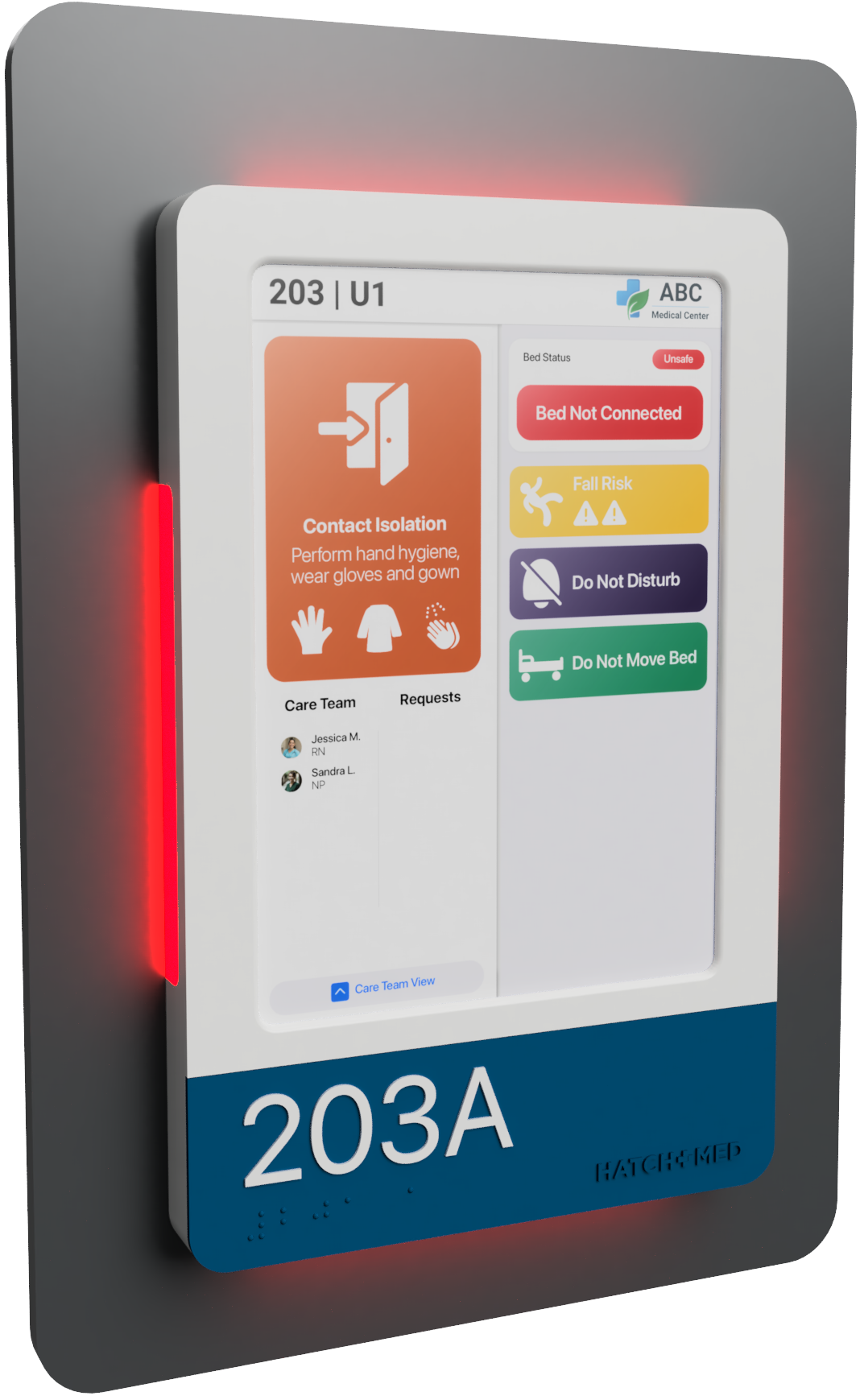
When we started designing HallMonitor, we were thinking about nurses in hallways, moving room to room, making decisions with limited time and incomplete information. Important details live inside the patient room while the hallway stays disconnected.
That gap was the problem we wanted to solve.
The Corridor as Care Environment
Corridors are where nurses prioritize tasks, check status, and decide where to go next. When information is missing or hard to trust, care teams adapt with paper flags, double-checking rooms, and interrupting each other. From the start, we treated the corridor as part of the care environment – not separate from it.
“There is so much patient information care teams need, and so many roles that need access to it – all while respecting HIPAA. Whatever you present must be actionable and respectful of the patient’s privacy. That balance is only possible if you blend hardware and software from the start.” – Kyrylo Kedyanskyy, Chief Product Officer, HatchMed
Glanceable by Design
Everything about HallMonitor had to be clear immediately. If something required training to interpret, it was wrong. Our measure of success: did it make the team’s work easier in real time?
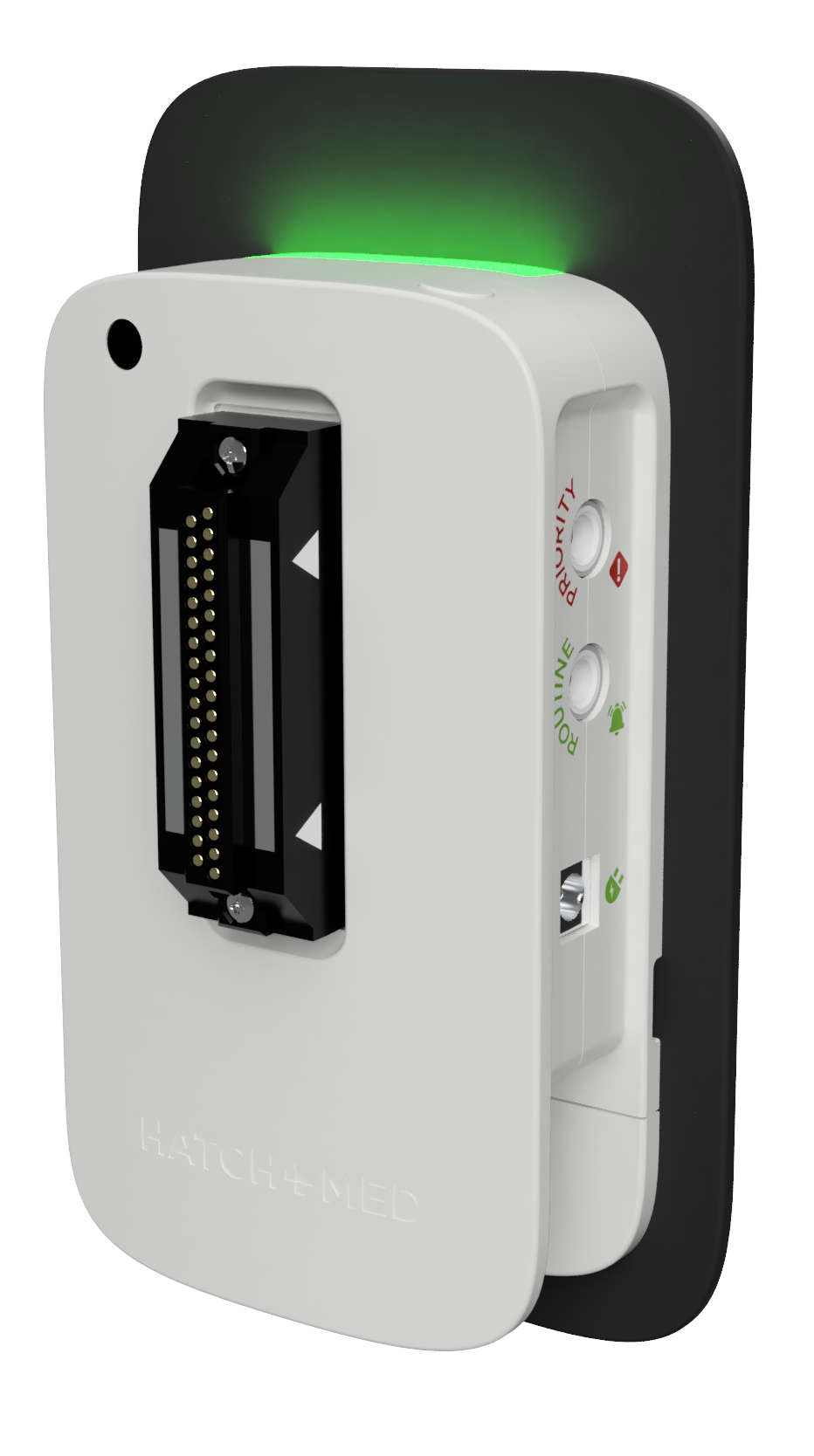
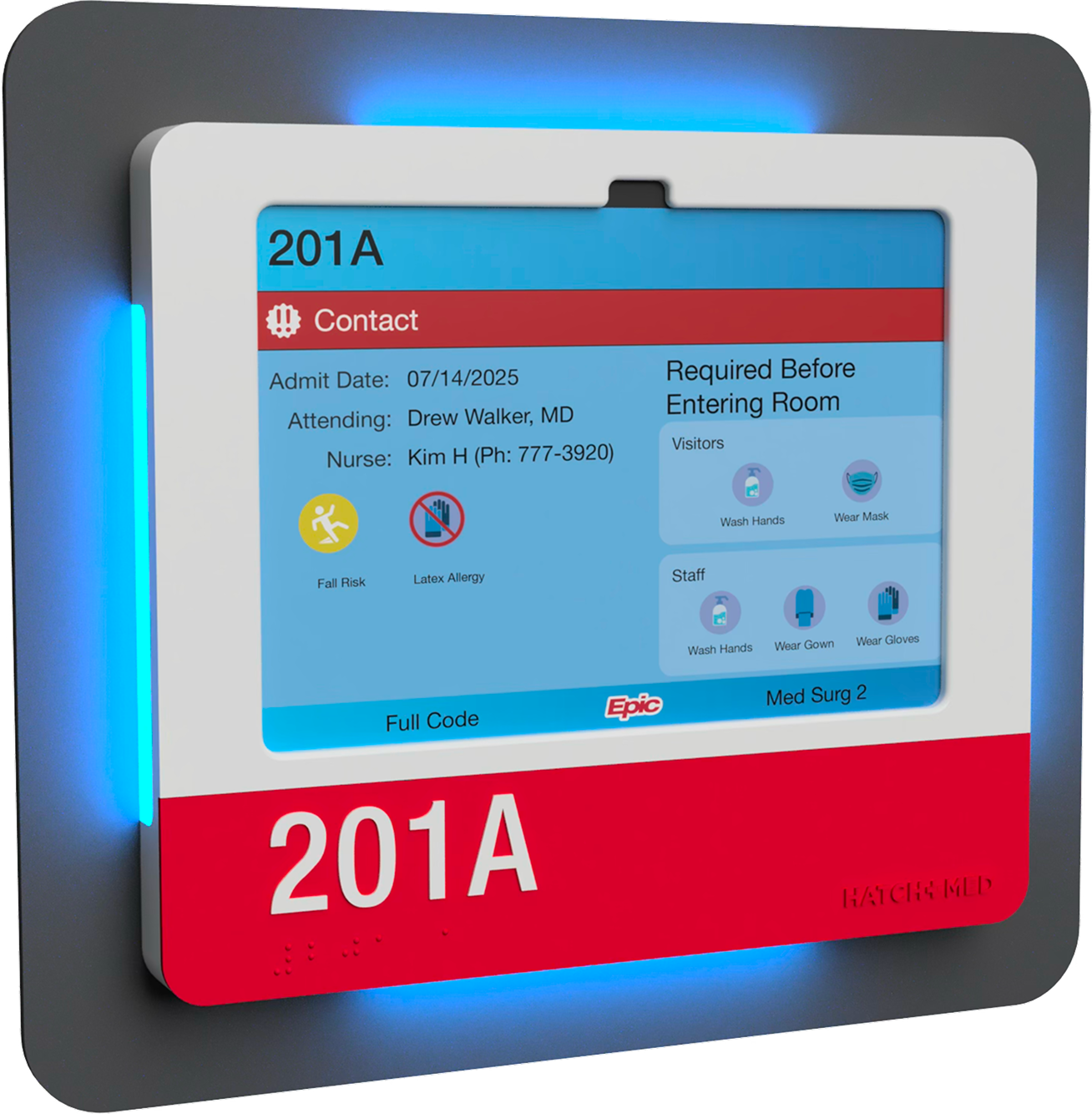
The RGBW LED illumination was designed with alarm fatigue in mind. “Hospitals already have blinking light syndrome everywhere. We did not want to add to it. Our illumination only draws attention when it absolutely needs to – otherwise it blends into the background. Look down any hallway and you can instantly see which rooms need attention.” – Kyrylo
Built for Real Corridors
Healthcare is not gentle on technology. Devices get bumped, cleaned, leaned on, and used constantly. HallMonitor had to hold up in real corridors, not just look good in a mockup. Trust is built when the technology simply works, every time.
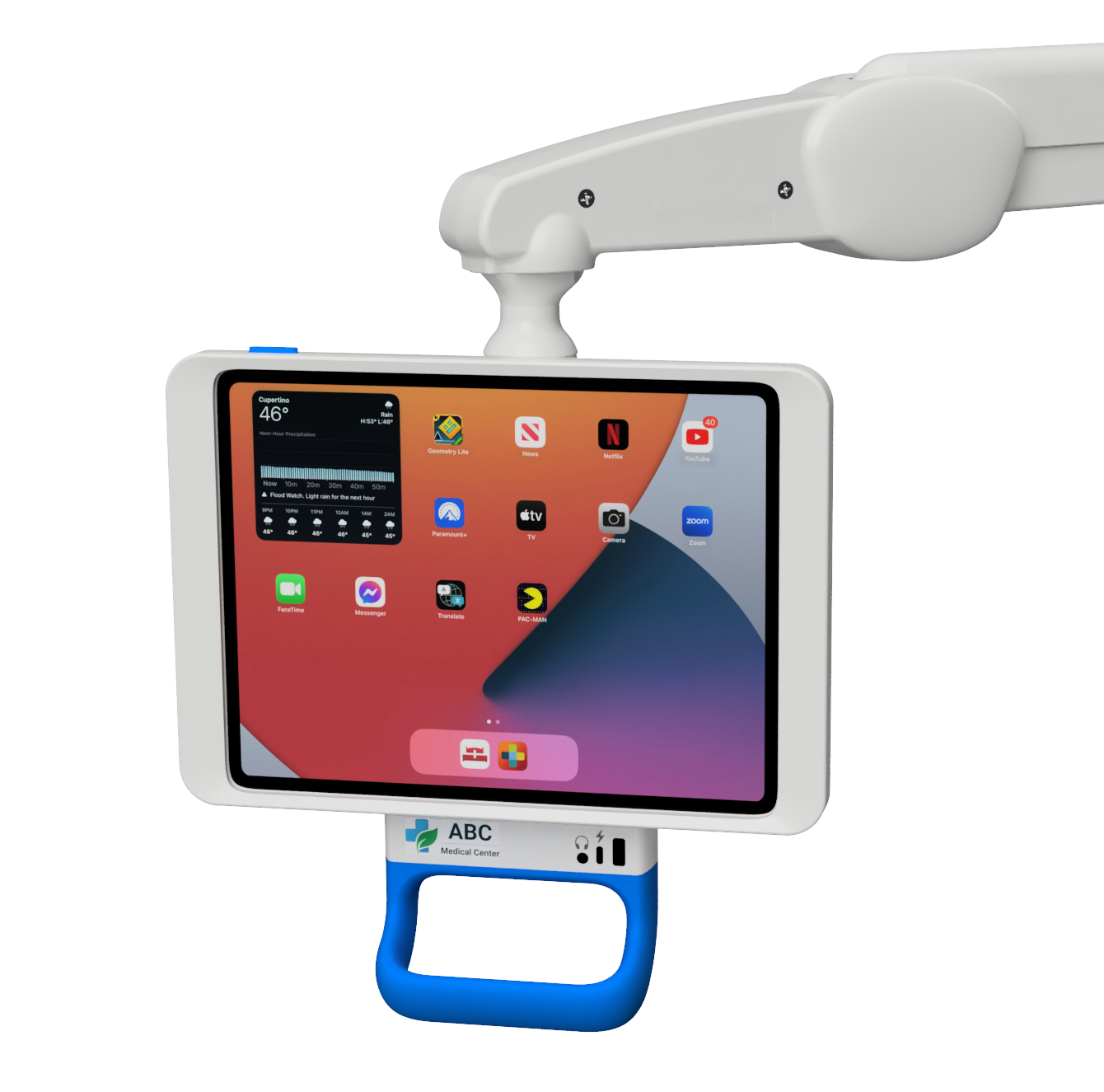
Deployment complexity kills most digital signage projects. “Most wall-mounted devices still use AC power or proprietary connections – entirely one-off installations. HallMonitor runs on PoE+: one switch in your network closet, one CAT6 cable per location. The iPad connects and automatically pairs. And hardwired Ethernet is more secure for HL7 and HIPAA data than Wi-Fi.” – Kyrylo
Respecting the Architecture
Architects and facilities teams are cautious about adding technology to patient corridors. The concern is not just function – it is how devices affect the space. We focused on keeping HallMonitor visually simple. The information matters; the device should stay out of the way.
“Every hospital has its own identity. We work with design teams to customize enclosure colors, accents, and fonts so HallMonitor feels like part of their facility – not a sore thumb. At the end of the day, it is custom-built for them.” – Kyrylo
Information Hierarchy That Works
HallMonitor combines EMR data, bed safety status, nurse call signals, and monitoring services in one view. But density alone was never the goal.
“Plenty of solutions just dump everything about a patient onto a screen. But people running into rooms are either not paying attention or moving too fast. The vital, time-sensitive information has to always catch the eye so the best decision can be made. Auxiliary information stays visible but less prominent – secondary context to guide decisions.” – Kyrylo
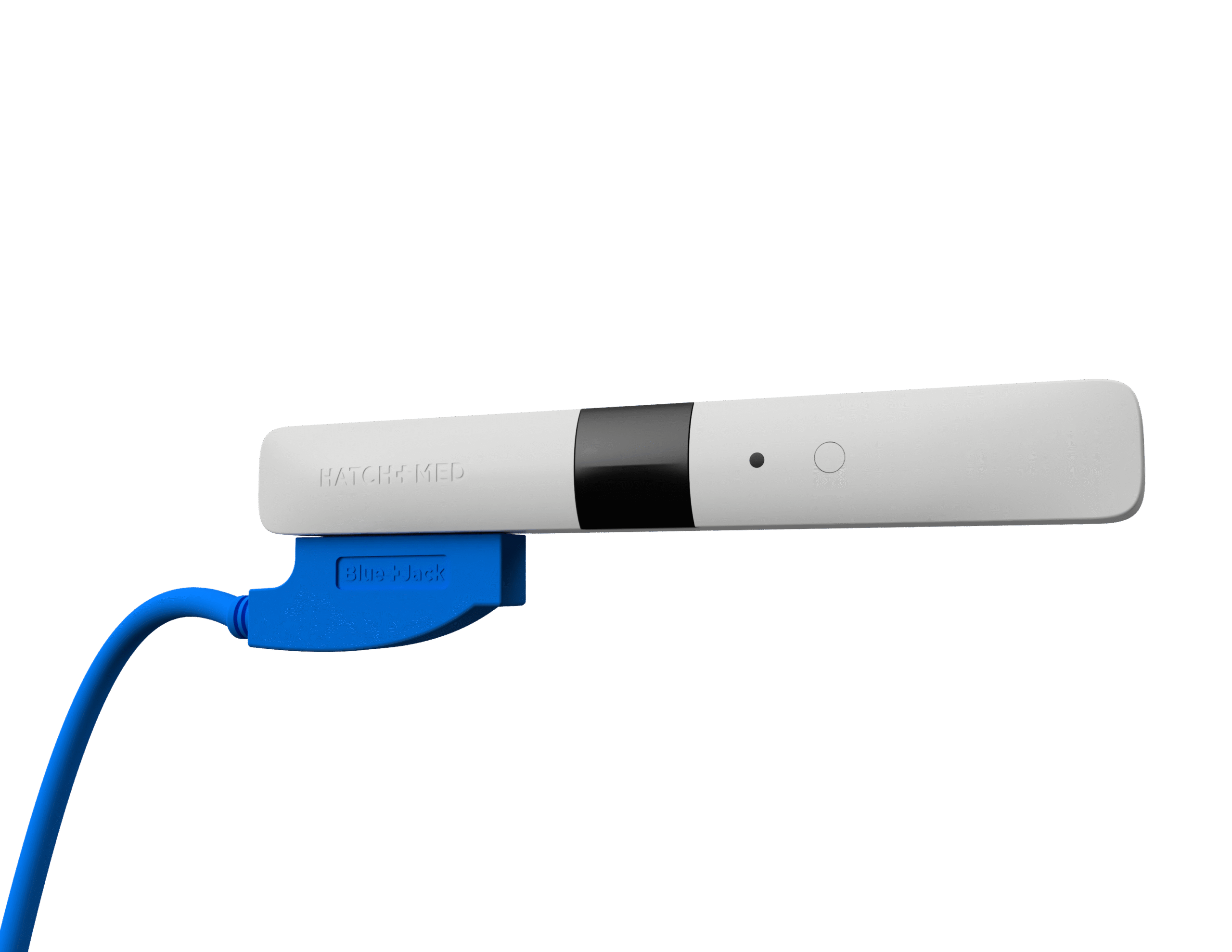
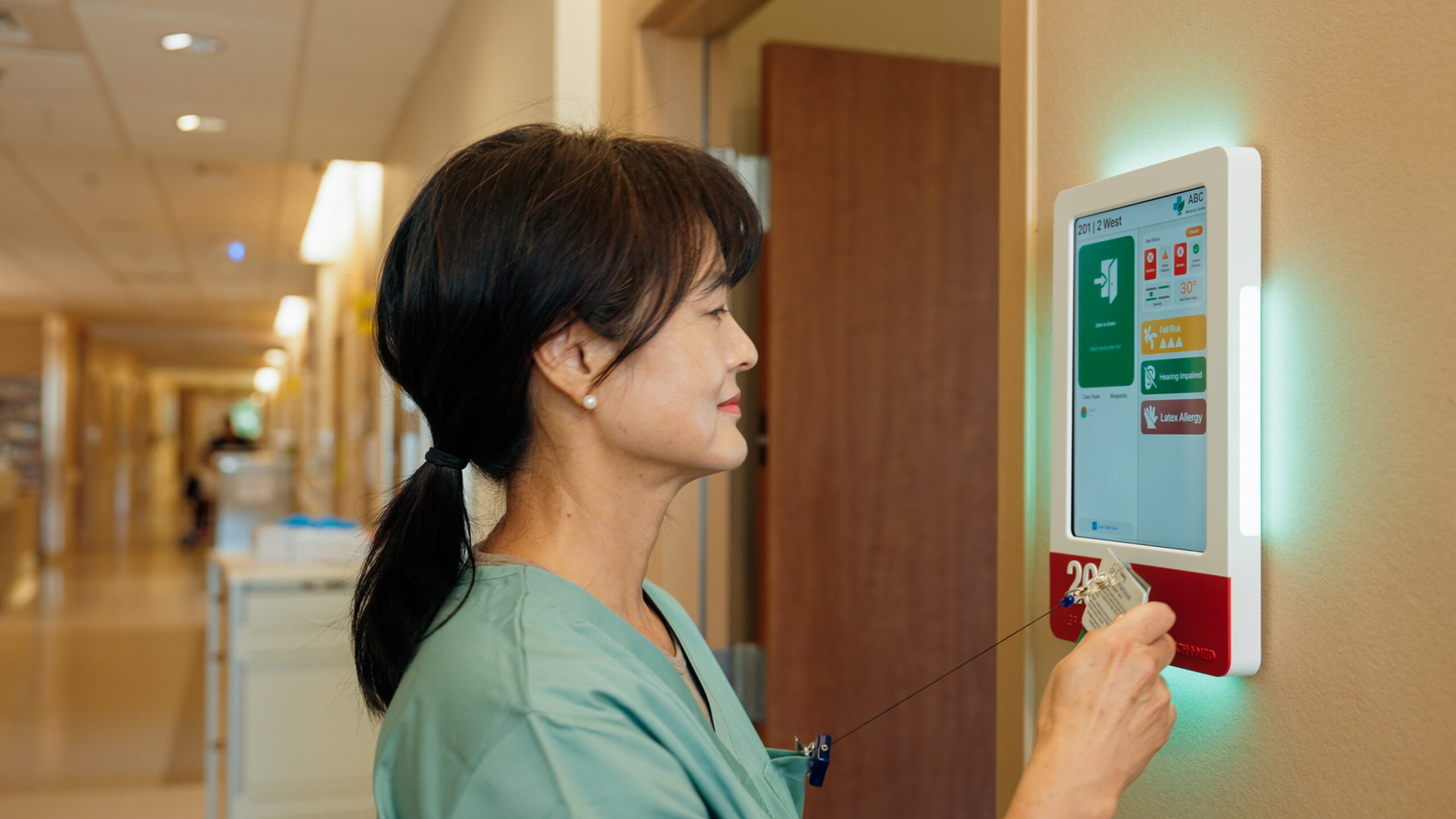
The optional RFID badge reader lets staff authenticate at the device for additional information or on-screen edits – updating statuses that are not stored in the EMR, directly and securely.
Time Back to Patient Care
With high census and staffing challenges, anything that helps care teams prioritize has real impact. In customer deployments, HallMonitor saves approximately 380 minutes daily for a 40-bed unit, with ROI typically within 10 months. Those hours go back to bedside care.
“We have three principles for every product. First, it must be pleasant to use – during one of the most intensive moments of their day, it should feel like an extension of the care team. Second, it must be rewarding to build internally. And most importantly, it must bring genuine value. We do not build things for the sake of building cool things. We build products that earn trust.” – Kyrylo
About the Red Dot Award
The Red Dot Design Award recognizes products that excel in innovation, functionality, and quality. Being recognized was meaningful – but the award was never the goal.
“We did not want to just put a tablet on a wall. That is easy and has been done. We built HallMonitor from the ground up for the hospital, for the care team, for the patient. That belief guided every decision.” – Kyrylo
If HallMonitor does its job well, it fades into the background and simply helps people do theirs. That is the kind of design we believe in.
Learn more about the award winning HallMonitor here.
